I’d have to say that Hain Celestial is better than H.J. Heinz, but it still has it’s issues. Out in Colorado alone, it is responsible for a massive Prairie Dog poisinign at the Celestial Seasnonins complex. Not a very animal or environmental-friendly step from a compmany that claims to care.
Press Release:
The Hain Celestial Group Acquires the Assets of the Linda McCartney(R) Brand Products and Meat-Free Business
http://finance.yahoo.com/
Tuesday June 13, 7:00 am ET
MELVILLE, N.Y., June 13 /PRNewswire-FirstCall/ -- The Hain Celestial Group, Inc. (Nasdaq: HAIN - News) today announced the acquisition of the Linda McCartney® brand (under license) frozen meat-free business from the H. J. Heinz Company, including the manufacturing facility based in Fakenham, England. A pioneer and leader in the meat-free category with its range of sausages, ready meals, and pastry products, the Linda McCartney range is recognized for its vegetarian credentials while providing healthy and tasty meal solutions.
"We now have the premier meat-free brand which will further support our expansion of natural and organic products. Acquiring the Linda McCartney range of vegetarian products reinforces our commitment to growing in this marketplace," said Irwin D. Simon, President and Chief Executive Officer of the Hain Celestial Group. "We are excited to have the opportunity to work with The McCartney Family in expanding the Linda McCartney frozen meat-free business in the United Kingdom and the rest of Europe as well as throughout North America."
In a statement released by the McCartney Family, they commented, "We are delighted to be joining together with Hain Celestial, a leading light in organic, natural products, to produce an even better range of foods than we have ever made before. We believe that the visions of both our companies fit perfectly with our desire to encourage more and more people to eat pure, vegetarian food. It was this desire that motivated Linda when she started Linda McCartney Foods originally and we hope to continue her good work and in doing so, her legacy."
Terms of the acquisition were not disclosed. The transaction is expected to be accretive to the earnings of Hain Celestial during its fiscal year 2007. In May Hain Celestial announced the acquisition of the Fresh Prepared Foods Business in Luton, England from Heinz. Hain Celestial has built a European presence with its natural and organic brands including Celestial Seasonings®, Terra Chips®, Soy Dream®, Rice Dream®, Natumi®, Lima®, Grains Noirs® and Biomarche(TM), and is committed to creating and promoting A Healthy Way of Life(TM).
The Linda McCartney brand is licensed under an agreement with Linda Enterprises Limited.
The Hain Celestial Group
The Hain Celestial Group (Nasdaq: HAIN - News), headquartered in Melville, NY, is a leading natural and organic food and personal care products company in North America and Europe. Hain Celestial participates in almost all natural food categories with well-known brands that include Celestial Seasonings®, Terra Chips®, Garden of Eatin'®, Health Valley®, WestSoy®, Earth's Best®, Arrowhead Mills®, DeBoles®, Hain Pure Foods®, FreeBird(TM), Hollywood®, Spectrum Naturals®, Spectrum Essentials®, Walnut Acres Organic(TM), Imagine Foods®, Rice Dream®, Soy Dream®, Rosetto®, Ethnic Gourmet®, Yves Veggie Cuisine®, Lima®, Biomarche(TM), Grains Noirs®, Natumi®, JASON®, Zia® Natural Skincare, Queen Helene®, Batherapy® and Footherapy®. For more information, visit http://www.hain-celestial.com .
Safe Harbor Statement
This press release contains forward-looking statements within and constitutes a "Safe Harbor" statement under the Private Securities Litigation Act of 1995. Except for the historical information contained herein, the matters discussed in this press release are forward-looking statements that involve known and unknown risks and uncertainties, which could cause our actual results to differ materially from those described in the forward- looking statements. These risks include but are not limited to general economic and business conditions; the ability to implement business and acquisition strategies and integrate acquisitions; competition; retention of key personnel; compliance with government regulations and other risks detailed from time-to-time in the Company's reports filed with the Securities and Exchange Commission, including the report on Form 10-K for the fiscal year ended June 30, 2005. The forward-looking statements made in this press release are current as of the date of this press release, and the Company does not undertake any obligation to update forward-looking statements.
Tuesday, June 13, 2006


Group Urges India's Fruit Exporters to Donate Mangoes as a Small Measure of Comfort to the Indian Macaques Used In Experiments in Covance Facilities
You’ll see below the horror that the company Covance puts primates through. Truly a sick group.
It's also good to note that "Covance also deals in the import and sale of laboratory animals. It is the single largest importer of primates in the US and the world's largest breeder of laboratory dogs."
Article:
Donate mangoes to 'research' monkeys: animal rights group
http://www.dailyindia.com/show/33503.php/Donate_mangoes_
to_research_monkeys:_animal_rights_group
By Indo Asian News Service
New Delhi, June 12 (IANS) An animal rights group has urged India's top fruit exporters to donate mangoes as a small measure of comfort to the many Indian macaques used in experiments in various facilities operated by one of the world's largest animal-testing laboratories Covance.
People for the Ethical Treatment of Animals (PETA), in a letter sent to exporters in eight cities across the country, has pointed out that because the macaques are kept in small, barren cages where they suffer from deprivation and loneliness, a meal of mangoes would give them nutrition and comfort as well as a connection to the home which their ancestors were forcibly removed from.
A Covance laboratory in New Jersey was the target of an 11-month PETA undercover investigation during which Covance employees were videotaped physically, verbally and psychologically abusing monkeys on a daily basis.
The US Department of Agriculture later fined Covance for 'serious violations of federal law'.
'We would like nothing better than to see Covance's animal torture chambers shut down for good,' said PETA research associate Alka Chandna in a statement here.
'But in the meantime, we are asking these fruit exporters to give these imprisoned and abused Indian macaques just a semblance of joy and comfort in their sad lives.'
Covance also deals in the import and sale of laboratory animals. It is the single largest importer of primates in the US and the world's largest breeder of laboratory dogs.
Copyright Indo-Asian News Service
It's also good to note that "Covance also deals in the import and sale of laboratory animals. It is the single largest importer of primates in the US and the world's largest breeder of laboratory dogs."
Article:
Donate mangoes to 'research' monkeys: animal rights group
http://www.dailyindia.com/show/33503.php/Donate_mangoes_
to_research_monkeys:_animal_rights_group
By Indo Asian News Service
New Delhi, June 12 (IANS) An animal rights group has urged India's top fruit exporters to donate mangoes as a small measure of comfort to the many Indian macaques used in experiments in various facilities operated by one of the world's largest animal-testing laboratories Covance.
People for the Ethical Treatment of Animals (PETA), in a letter sent to exporters in eight cities across the country, has pointed out that because the macaques are kept in small, barren cages where they suffer from deprivation and loneliness, a meal of mangoes would give them nutrition and comfort as well as a connection to the home which their ancestors were forcibly removed from.
A Covance laboratory in New Jersey was the target of an 11-month PETA undercover investigation during which Covance employees were videotaped physically, verbally and psychologically abusing monkeys on a daily basis.
The US Department of Agriculture later fined Covance for 'serious violations of federal law'.
'We would like nothing better than to see Covance's animal torture chambers shut down for good,' said PETA research associate Alka Chandna in a statement here.
'But in the meantime, we are asking these fruit exporters to give these imprisoned and abused Indian macaques just a semblance of joy and comfort in their sad lives.'
Covance also deals in the import and sale of laboratory animals. It is the single largest importer of primates in the US and the world's largest breeder of laboratory dogs.
Copyright Indo-Asian News Service
Activists Have Been Banned from Demonstrating Where Construction Workers from Oxford University's New Research Laboratory are Living
I think it’s pretty clear now that the UK government has given up on upholding any rights people have to express their opinions.
Article:
Judge bans animal rights protest at builders' digs
http://www.telegraph.co.uk/news/main.jhtml?xml=/news/
2006/06/13/nanim13.xml&sSheet=/news/2006/06/13/ixuknews.html
By Rosie Murray-West
(Filed: 13/06/2006)
Animal rights activists have been banned from demonstrating in a Cotswold village where construction workers from Oxford University's new research laboratory are being accommodated.
The activists' demonstrations were already restricted at the building site by an injunction granted to the university. Now a High Court judge has extended that order to cover Moreton-in-Marsh Fire Service College, where the workers are living.
The activists will be allowed to hold a lawful demonstration outside the college only on a Wednesday afternoon, provided there are fewer than 50 people. Speak, the organisation leading the campaign against the building, which will house animals for testing, said it would appeal.
The protests and threats to shareholders and workers led to an earlier contractor pulling out of the project.
Article:
Judge bans animal rights protest at builders' digs
http://www.telegraph.co.uk/news/main.jhtml?xml=/news/
2006/06/13/nanim13.xml&sSheet=/news/2006/06/13/ixuknews.html
By Rosie Murray-West
(Filed: 13/06/2006)
Animal rights activists have been banned from demonstrating in a Cotswold village where construction workers from Oxford University's new research laboratory are being accommodated.
The activists' demonstrations were already restricted at the building site by an injunction granted to the university. Now a High Court judge has extended that order to cover Moreton-in-Marsh Fire Service College, where the workers are living.
The activists will be allowed to hold a lawful demonstration outside the college only on a Wednesday afternoon, provided there are fewer than 50 people. Speak, the organisation leading the campaign against the building, which will house animals for testing, said it would appeal.
The protests and threats to shareholders and workers led to an earlier contractor pulling out of the project.
Actions to Expose Cruelty of Zoos in the Philippines Continues
Below you’ll read why this action continues. The treatment and condisitonr are horrendous.
Article:
Animal welfare group steps up anti-zoo drive
http://news.inq7.net/metro/index.php?index=1&story_id=78956
By Tina G. Santos
Inquirer
Editor's Note: Published on Page A18 of the June 13, 2006 issue of the Philippine Daily Inquirer
THE People for the Ethical Treatment of Animals (Peta) has stepped up its campaign to shut down all the zoos in the country.
Jamie Alarcon, spokesperson of the animal rights group, yesterday said they have come up with various antizoo advertisements “to strengthen their campaign and to remind people that animals are better off in the wild.”
“We stand in our belief that the only thing zoos teach people is that it’s okay to imprison the innocent and dictate to them what to do with their lives,” she said.
“It’s wrong to put these animals on display so that people can learn about them,” Alarcon added.
The protest, part of Peta’s worldwide campaign against zoos, calls for the Philippines to lead the way by becoming the first zoo-free country in Asia.
Peta’s antizoo advertisements include posters showing a comparison of animals who live in the wild and those confined in a zoo, Alarcon said.
One poster features an ostrich and an elephant inside a zoo.
The pictures is the message: “Life in the zoo: Lonely, sad, stressed, confined and away from home.”
“Ostriches can run up to 70 kilometers per hour. Just one stride can be three to five meters long—bigger than most rooms! They live in herds made up of 10 up to 100 animals,” Alarcon said.
She added that the elephant in Manila Zoo is confined to a small enclosure with little grass.
“Elephants can walk up to 48 kilometers every day in the wild but the entire zoo measures 5.5 hectares, or 0.055-sq km,” the Peta spokesperson said.
The other print ads feature an orangutan and several zebras living in the wild with the message: “Life in the wild: Gentle, happy, proud, content and free.”
“Orangutans, a highly endangered species, spend nearly all their time in the trees,” she said. “The Manila Zoo has a metal platform for its orangutan, but little else for swinging and other exercise.”
Alarcon said their group would also shoot antizoo commercials featuring local celebrities.
Article:
Animal welfare group steps up anti-zoo drive
http://news.inq7.net/metro/index.php?index=1&story_id=78956
By Tina G. Santos
Inquirer
Editor's Note: Published on Page A18 of the June 13, 2006 issue of the Philippine Daily Inquirer
THE People for the Ethical Treatment of Animals (Peta) has stepped up its campaign to shut down all the zoos in the country.
Jamie Alarcon, spokesperson of the animal rights group, yesterday said they have come up with various antizoo advertisements “to strengthen their campaign and to remind people that animals are better off in the wild.”
“We stand in our belief that the only thing zoos teach people is that it’s okay to imprison the innocent and dictate to them what to do with their lives,” she said.
“It’s wrong to put these animals on display so that people can learn about them,” Alarcon added.
The protest, part of Peta’s worldwide campaign against zoos, calls for the Philippines to lead the way by becoming the first zoo-free country in Asia.
Peta’s antizoo advertisements include posters showing a comparison of animals who live in the wild and those confined in a zoo, Alarcon said.
One poster features an ostrich and an elephant inside a zoo.
The pictures is the message: “Life in the zoo: Lonely, sad, stressed, confined and away from home.”
“Ostriches can run up to 70 kilometers per hour. Just one stride can be three to five meters long—bigger than most rooms! They live in herds made up of 10 up to 100 animals,” Alarcon said.
She added that the elephant in Manila Zoo is confined to a small enclosure with little grass.
“Elephants can walk up to 48 kilometers every day in the wild but the entire zoo measures 5.5 hectares, or 0.055-sq km,” the Peta spokesperson said.
The other print ads feature an orangutan and several zebras living in the wild with the message: “Life in the wild: Gentle, happy, proud, content and free.”
“Orangutans, a highly endangered species, spend nearly all their time in the trees,” she said. “The Manila Zoo has a metal platform for its orangutan, but little else for swinging and other exercise.”
Alarcon said their group would also shoot antizoo commercials featuring local celebrities.
Monday, June 12, 2006
Grocery Chain Safeway Wins Praise for Moving Towards Pushing Suppliers to Honor Higher Animal Welfare Standards
This is a great story that really gives you insight into the grocery industry and it’s relation to animal rights. Though Safeway is far from perfect, it is now basically leading the way in terms of moving the chain store supermarkets towards holding suppliers accountable to honoring higher animal welfare standards. This is accomplished through auditing of slaughter house facilities and through the formation of a six-member animal welfare committee. The formation of the committee really is ground breaking and demonstrates at least a movement in the right direction.
Article:
Safeway, PETA retract claws
Grocer may take further steps on animal rights
http://msnbc.msn.com/id/13269156/
In less than five years, the relationship between Pleasanton-based grocery giant Safeway Inc. and People for the Ethical Treatment of Animals has gone from adversarial to a mutual admiration society.
In 2001, PETA, the nation's foremost advocate for the humane treatment of animals, launched a Web site called Shameway.com that took the supermarket chain to task for not demanding higher standards for animal treatment from its suppliers of meat and poultry products. Some suppliers, the organization claims, engage in cruel and abusive practices in raising and slaughtering cattle, pigs, chickens and turkeys. PETA members picketed Safeway shareholder meetings to voice their displeasure.
But in 2006, the words of Matt Prescott, PETA's manager of factory farming campaigns, indicate a sea change in the pair's relationship.
"In our opinion, Safeway is second only to Whole Foods in the supermarket industry when it comes to having high animal welfare standards," Prescott said. "They have been cooperative and wonderful to work with for quite some time now."
The threat of a consumer boycott of Safeway, called for five years ago by PETA, based in Norfolk, Va., may have helped nudge the supermarket giant in its direction. But both Prescott and Safeway spokesman Brian Dowling said that as public concern has grown over the treatment - PETA supporters say mistreatment - of farm animals, the issue has gained traction in corporate America.
Today, Prescott, while praising Whole Foods Market Inc. and Safeway, says that some of their main industry rivals are "about as bad as you can get. They don't seem to take the issue seriously."
Dowling said times have changed very rapidly in the grocery industry - at least as far as his company is concerned.
"Our awareness as a company and as an industry is much greater on animal welfare today," Dowling said. "We hear from our customers that this is an issue they're concerned about. Many have made it clear they want to shop at a store that requires its suppliers to treat animals humanely."
Agreeing with that assessment is Neil Stern, partner in the Chicago retail consulting firm McMillan-Doolittle LLP.
"Safeway is doing a much better job of responding to its customers and being proactive about environmental, sustainability and animal welfare issues," Stern said. "It really is in keeping with the kind of consumers attracted to their new 'lifestyle' stores, who pay attention to these issues. It's a win-win for the company from a public image and financial standpoint."
Safeway received praise in late May from Oceana, an ocean conservation advocacy group, over the company's decision to voluntarily post signs warning customers of the presence of mercury in some fish and seafood products being sold in its stores. Oceana said Safeway and Wild Oats, a health-food supermarket chain based in Boulder, Colo., were the only grocers to post such warnings.
"The issue was raised and as we became more educated about it, we felt it was worthwhile to inform our customers," said Dowling, noting the Food and Drug Administration had issued the mercury warning. "We're in the business of being responsive to our customers' needs, so we keep on top of these issues."
On the animal welfare front, Safeway "audits" its suppliers of beef and pork products to make sure animals are treated humanely before and during the slaughtering process. Safeway uses its own auditors, as well as independent outside observers.
"The packing houses are increasingly tuned into this issue," Dowling said. "We engage in periodic short-notice visits. It's in their best interest to treat the animals humanely."
Dowling said Safeway also is eliminating lobster tanks from its stores. Animal rights activists claim the tanks can be dirty and crowded, and lobsters routinely starve.;
The company also is forming a six-member animal welfare committee, one of the first in the industry. The committee will examine issues as they arise and make recommendations to company officials. Half of the committee will consist of noted experts on issues of animal welfare and animal science: Temple Grandin, associate professor of animal science at Colorado State University; Janice Swanson, interim head of the animal science and industry department at Kansas State University; and Sara Shields, a lecturer in the animal science department of the University of Nebraska.
"We have a broad mandate to provide guidance to the company on animal welfare issues," said Dowling, a member of the committee. The committee likely will meet three times a year.
While still rare in the world of supermarkets, such groups have become common in the fast-food industry. Though it took plenty of pressure from animal rights organizations, one of America's greatest corporate icons, McDonald's Corp. of Oak Brook, Ill., began auditing cattle and pig slaughterhouses in 1999. Some of its suppliers were not able to meet the fast-food giant's new standards and were dropped. The following year, McDonald's began similar scrutiny of chicken and egg suppliers.
McDonald's has been followed by Burger King Corp. and Wendy's International Inc. PETA's Prescott said McDonald's reversal was a watershed event in the corporate animal welfare movement.
Processing of chickens and turkeys into poultry products sold at supermarkets and some restaurants has become the latest focus of welfare advocates. Birds are exempt from minimal treatment standards previously adopted by the federal government for cattle and pigs.
While he praised Safeway for its progress so far, Steven Gross, a member of PETA, which owns 192 shares of Safeway stock, urged the company at this year's annual shareholder meeting May 25 to adopt a policy requiring poultry suppliers to use controlled-atmosphere killing, or CAK. CAK methods essentially put birds to "sleep," with their oxygen supply gradually replaced by inert gases.
Prescott said CAK, though widely used in Europe, remains a rarity in North America, where, according to Prescott, poultry processors typically use electrified water to stun birds before slaughter. Since that technique often does not work, Prescott said, the animals have their throats slit or are dropped in scalding water while fully conscious. Critics of the practice claim it causes unnecessary suffering and is costlier than CAK.
"The CAK method is far more humane and more cost-effective," Prescott said.
Steve Burd, Safeway's CEO, told Gross and other shareholders that his company would "look into" the possibility of adopting CAK as a supplier requirement. Dowling confirmed the company would examine the matter.
Although those words may not cinch the deal for PETA, it's a good start, Prescott contends.
"Since our campaign against Safeway five years ago, the company has done an about-face on this issue," he said. "I think (the boycott) played a part, but I also feel company management has really changed. They realize today how deeply a large percentage of their customers care about this issue."
Article:
Safeway, PETA retract claws
Grocer may take further steps on animal rights
http://msnbc.msn.com/id/13269156/
In less than five years, the relationship between Pleasanton-based grocery giant Safeway Inc. and People for the Ethical Treatment of Animals has gone from adversarial to a mutual admiration society.
In 2001, PETA, the nation's foremost advocate for the humane treatment of animals, launched a Web site called Shameway.com that took the supermarket chain to task for not demanding higher standards for animal treatment from its suppliers of meat and poultry products. Some suppliers, the organization claims, engage in cruel and abusive practices in raising and slaughtering cattle, pigs, chickens and turkeys. PETA members picketed Safeway shareholder meetings to voice their displeasure.
But in 2006, the words of Matt Prescott, PETA's manager of factory farming campaigns, indicate a sea change in the pair's relationship.
"In our opinion, Safeway is second only to Whole Foods in the supermarket industry when it comes to having high animal welfare standards," Prescott said. "They have been cooperative and wonderful to work with for quite some time now."
The threat of a consumer boycott of Safeway, called for five years ago by PETA, based in Norfolk, Va., may have helped nudge the supermarket giant in its direction. But both Prescott and Safeway spokesman Brian Dowling said that as public concern has grown over the treatment - PETA supporters say mistreatment - of farm animals, the issue has gained traction in corporate America.
Today, Prescott, while praising Whole Foods Market Inc. and Safeway, says that some of their main industry rivals are "about as bad as you can get. They don't seem to take the issue seriously."
Dowling said times have changed very rapidly in the grocery industry - at least as far as his company is concerned.
"Our awareness as a company and as an industry is much greater on animal welfare today," Dowling said. "We hear from our customers that this is an issue they're concerned about. Many have made it clear they want to shop at a store that requires its suppliers to treat animals humanely."
Agreeing with that assessment is Neil Stern, partner in the Chicago retail consulting firm McMillan-Doolittle LLP.
"Safeway is doing a much better job of responding to its customers and being proactive about environmental, sustainability and animal welfare issues," Stern said. "It really is in keeping with the kind of consumers attracted to their new 'lifestyle' stores, who pay attention to these issues. It's a win-win for the company from a public image and financial standpoint."
Safeway received praise in late May from Oceana, an ocean conservation advocacy group, over the company's decision to voluntarily post signs warning customers of the presence of mercury in some fish and seafood products being sold in its stores. Oceana said Safeway and Wild Oats, a health-food supermarket chain based in Boulder, Colo., were the only grocers to post such warnings.
"The issue was raised and as we became more educated about it, we felt it was worthwhile to inform our customers," said Dowling, noting the Food and Drug Administration had issued the mercury warning. "We're in the business of being responsive to our customers' needs, so we keep on top of these issues."
On the animal welfare front, Safeway "audits" its suppliers of beef and pork products to make sure animals are treated humanely before and during the slaughtering process. Safeway uses its own auditors, as well as independent outside observers.
"The packing houses are increasingly tuned into this issue," Dowling said. "We engage in periodic short-notice visits. It's in their best interest to treat the animals humanely."
Dowling said Safeway also is eliminating lobster tanks from its stores. Animal rights activists claim the tanks can be dirty and crowded, and lobsters routinely starve.;
The company also is forming a six-member animal welfare committee, one of the first in the industry. The committee will examine issues as they arise and make recommendations to company officials. Half of the committee will consist of noted experts on issues of animal welfare and animal science: Temple Grandin, associate professor of animal science at Colorado State University; Janice Swanson, interim head of the animal science and industry department at Kansas State University; and Sara Shields, a lecturer in the animal science department of the University of Nebraska.
"We have a broad mandate to provide guidance to the company on animal welfare issues," said Dowling, a member of the committee. The committee likely will meet three times a year.
While still rare in the world of supermarkets, such groups have become common in the fast-food industry. Though it took plenty of pressure from animal rights organizations, one of America's greatest corporate icons, McDonald's Corp. of Oak Brook, Ill., began auditing cattle and pig slaughterhouses in 1999. Some of its suppliers were not able to meet the fast-food giant's new standards and were dropped. The following year, McDonald's began similar scrutiny of chicken and egg suppliers.
McDonald's has been followed by Burger King Corp. and Wendy's International Inc. PETA's Prescott said McDonald's reversal was a watershed event in the corporate animal welfare movement.
Processing of chickens and turkeys into poultry products sold at supermarkets and some restaurants has become the latest focus of welfare advocates. Birds are exempt from minimal treatment standards previously adopted by the federal government for cattle and pigs.
While he praised Safeway for its progress so far, Steven Gross, a member of PETA, which owns 192 shares of Safeway stock, urged the company at this year's annual shareholder meeting May 25 to adopt a policy requiring poultry suppliers to use controlled-atmosphere killing, or CAK. CAK methods essentially put birds to "sleep," with their oxygen supply gradually replaced by inert gases.
Prescott said CAK, though widely used in Europe, remains a rarity in North America, where, according to Prescott, poultry processors typically use electrified water to stun birds before slaughter. Since that technique often does not work, Prescott said, the animals have their throats slit or are dropped in scalding water while fully conscious. Critics of the practice claim it causes unnecessary suffering and is costlier than CAK.
"The CAK method is far more humane and more cost-effective," Prescott said.
Steve Burd, Safeway's CEO, told Gross and other shareholders that his company would "look into" the possibility of adopting CAK as a supplier requirement. Dowling confirmed the company would examine the matter.
Although those words may not cinch the deal for PETA, it's a good start, Prescott contends.
"Since our campaign against Safeway five years ago, the company has done an about-face on this issue," he said. "I think (the boycott) played a part, but I also feel company management has really changed. They realize today how deeply a large percentage of their customers care about this issue."
Another Premature and Unnatural Elephant Death in a Zoo: 48-Year-Old Asian Elephant Named Gita at Los Angeles Zoo
Once again, another death. A very important fact to note:
The average life span of Asian elephants in captivity is 42-years. In the wild, Asian elephants live about 70 years. Unless you’re an idiot, you can see the obvious difference.
Rightly, groups are calling for the resignation of the director of the Los Angeles Zoo, John Lewis, claiming that once again, it’s poor living conditions at the zoo that caused the death.
Whatever happens though, it’s clear that the lives of elephants in zoos are unnaturally short and painful.
Article:
Activists seek shake-up at the L.A. Zoo after elephant's death
http://www.sfgate.com/cgi-bin/article.cgi?f=/n/a/2006/06/11/
state/n203242D09.DTL&hw=Activists+seek+shake+up+at+the+
Zoo+after+elephant+death&sn=001&sc=1000
Sunday, June 11, 2006
(06-11) 20:32 PDT Los Angeles (AP) --
Animal rights activists have called for the resignation of the director of the Los Angeles Zoo, holding him responsible for the death of a 48-year-old Asian elephant named Gita.
People for the Ethical Treatment of Animals faxed a letter Sunday to Director John Lewis, saying Gita's death was caused by poor living conditions at the zoo.
PETA's letter said Lewis ignored "the simple fact that space limitations prevent the Los Angeles Zoo from adequately providing for the physical and social needs of the world's largest land mammal."
Zoo officials did not return calls seeking comment.
About 40 representatives from other activist groups protested Sunday in front of the zoo's entrance, demanding the elephants be transferred to a sanctuary.
"Our main message is that our organization holds the zoo, the mayor and city officials accountable for Gita's death," said Catherine Doyle of In Defense of Animals. "Gita was warehoused, held in inadequate conditions that worsened her already bad conditions, including arthritis."
Gita died Saturday morning after she was found sitting with her back legs tucked under. It was not immediately known whether a necropsy scheduled for Sunday at the California Animal Health and Food Safety Lab in San Bernardino had been completed. A call to the lab was not returned.
Zoo officials said they believed Gita died when toxins from her muscles entered her bloodstream under the crushing weight of her own frame. The elephant had suffered arthritis for years.
Lewis had said Gita outlived the 42-year average life span of Asian elephants in captivity. In the wild, Asian elephants live about 70 years.
The average life span of Asian elephants in captivity is 42-years. In the wild, Asian elephants live about 70 years. Unless you’re an idiot, you can see the obvious difference.
Rightly, groups are calling for the resignation of the director of the Los Angeles Zoo, John Lewis, claiming that once again, it’s poor living conditions at the zoo that caused the death.
Whatever happens though, it’s clear that the lives of elephants in zoos are unnaturally short and painful.
Article:
Activists seek shake-up at the L.A. Zoo after elephant's death
http://www.sfgate.com/cgi-bin/article.cgi?f=/n/a/2006/06/11/
state/n203242D09.DTL&hw=Activists+seek+shake+up+at+the+
Zoo+after+elephant+death&sn=001&sc=1000
Sunday, June 11, 2006
(06-11) 20:32 PDT Los Angeles (AP) --
Animal rights activists have called for the resignation of the director of the Los Angeles Zoo, holding him responsible for the death of a 48-year-old Asian elephant named Gita.
People for the Ethical Treatment of Animals faxed a letter Sunday to Director John Lewis, saying Gita's death was caused by poor living conditions at the zoo.
PETA's letter said Lewis ignored "the simple fact that space limitations prevent the Los Angeles Zoo from adequately providing for the physical and social needs of the world's largest land mammal."
Zoo officials did not return calls seeking comment.
About 40 representatives from other activist groups protested Sunday in front of the zoo's entrance, demanding the elephants be transferred to a sanctuary.
"Our main message is that our organization holds the zoo, the mayor and city officials accountable for Gita's death," said Catherine Doyle of In Defense of Animals. "Gita was warehoused, held in inadequate conditions that worsened her already bad conditions, including arthritis."
Gita died Saturday morning after she was found sitting with her back legs tucked under. It was not immediately known whether a necropsy scheduled for Sunday at the California Animal Health and Food Safety Lab in San Bernardino had been completed. A call to the lab was not returned.
Zoo officials said they believed Gita died when toxins from her muscles entered her bloodstream under the crushing weight of her own frame. The elephant had suffered arthritis for years.
Lewis had said Gita outlived the 42-year average life span of Asian elephants in captivity. In the wild, Asian elephants live about 70 years.
Editorial: Why it’s A Common Sense Good Move That Spain Is Proposing to Recognize the Moral Rights of Great Apes as Legal Persons
This is good reading for everyone. Not only does the author do a good job of breaking down the relations of humans to our primate cousins, he also lays out the logic behind Spain’s amazing move.
He also brings attention to the Great Ape Project, a group dedicated to pushing forth these necessary changes. You can learn more at: http://www.greatapeproject.org/
Article:
Spain Going Ape for Animal Rights
http://www.progress.org/2006/fold459.htm
Fred Foldvary
by Fred E. Foldvary, Senior Editor
The Great Ape Project, based in a Seattle, Washington, has campaigned for a "community of equals" in which all the great apes would have the legal rights to life, freedom, and protection from torture. Now the ruling coalition in Spain is proposing to apply this idea in a law that would recognize the moral rights of great apes as legal persons.
The argument that all the great apes have the same moral rights as human beings rests on the biological connection that human beings have to the other apes, and to the relatively high intelligence shown by non-human apes. Human beings, apes, monkeys, and lemurs belong to the primate order of mammals. Human beings are of the Hominoidea superfamily of primates, which is composed of two families, Hylobatidae (gibbons, the lesser apes), and Hominidae, the great apes.
The great apes include gorillas, chimpanzees, orangutans, and homo sapiens, human beings. According to current biological taxonomy, Hominidae are currently classed into two subfamilies, Homininae (human beings and gorillas) and Ponginae (orangutans). Homininae are divided into two tribes, Hominini and Gorillini (gorillas). Hominini are classed in two genera, the genus Pan with chimpanzees, and the genus Homo with human beings.
So we can see that human beings are very closely related especially to chimpanzees, and also kin to gorillas. Homininae are highly intelligent, some gorillas having learned to speak in sign language, and chimpanzees being observed to use tools and to have a learned culture. The evidence indicates that the non-human great apes use reason and choose their action to a great extent. Moral logic therefore concludes that killing to inflicting pain on great apes imposes a great amount of harm on them, which implies that all great apes have moral rights. Spain would be well justified to become the first country to legally recognize the moral rights of great apes.
The proposal, led by Francisco Garrido, a member of the Green party, would legally replace the "ownership" of great apes with "moral guardianship," similar to the treatment of children and people in comas. Under that law, the initiation of force against a great ape, such killing, inflicting unnecessary pain, taking a baby away from its family, or enslavement (such as confining them in a cage), would be a crime, although zoos could continue to keep them if moving them elsewhere would be more harmful.
Other countries have already enacted some legal recognition of moral rights for apes. New Zealand's animal welfare act prescribes that research and testing using a great ape requires that the expected benefits be greater than the harm to the apes, and Great Britain has banned medical experimentation on great apes.
Opposition to the Spanish proposal has been voice by prominent Catholics, who say that human embryos would have less legal protection than the designated animals. Spanish members of Amnesty International have pointed out that the moral rights of many human beings are not yet protected, and should have priority.
But these are not valid arguments against the legal recognition of the moral rights of the great apes. One wrong does not justify another wrong. Those opposed to the legal protection of apes against harm need to confront the argument in favor of moral rights for apes. There is nothing in natural moral law that specifically privileges human beings as morally superior. The moral rights of human beings derives from their high degree, as a species, of intelligence and sentience, and if other species, such as chimpanzees and dolphins, exhibit such characteristics, then by natural moral law, they have the same level of moral rights.
The degree of reasoning capacity held by non-human apes, along with other animals such as dolphins, is a matter of biological evidence. It seems to me that we should give these animals the benefit of the doubt, and if we err, it should be on the side of their having moral rights.
So, bravo to Spain for leading the way. If the great apes are accorded more respect, then this would help the world to give human beings also greater protection for their human rights. If all the great apes are accorded legal protection against harm, we will then have to speak not of just human rights, but Hominidae rights. We could call all the great apes "sapiens" and refer to sapient rights. The motto could then be: equal rights for all sapiens; privileges for none!
He also brings attention to the Great Ape Project, a group dedicated to pushing forth these necessary changes. You can learn more at: http://www.greatapeproject.org/
Article:
Spain Going Ape for Animal Rights
http://www.progress.org/2006/fold459.htm
Fred Foldvary
by Fred E. Foldvary, Senior Editor
The Great Ape Project, based in a Seattle, Washington, has campaigned for a "community of equals" in which all the great apes would have the legal rights to life, freedom, and protection from torture. Now the ruling coalition in Spain is proposing to apply this idea in a law that would recognize the moral rights of great apes as legal persons.
The argument that all the great apes have the same moral rights as human beings rests on the biological connection that human beings have to the other apes, and to the relatively high intelligence shown by non-human apes. Human beings, apes, monkeys, and lemurs belong to the primate order of mammals. Human beings are of the Hominoidea superfamily of primates, which is composed of two families, Hylobatidae (gibbons, the lesser apes), and Hominidae, the great apes.
The great apes include gorillas, chimpanzees, orangutans, and homo sapiens, human beings. According to current biological taxonomy, Hominidae are currently classed into two subfamilies, Homininae (human beings and gorillas) and Ponginae (orangutans). Homininae are divided into two tribes, Hominini and Gorillini (gorillas). Hominini are classed in two genera, the genus Pan with chimpanzees, and the genus Homo with human beings.
So we can see that human beings are very closely related especially to chimpanzees, and also kin to gorillas. Homininae are highly intelligent, some gorillas having learned to speak in sign language, and chimpanzees being observed to use tools and to have a learned culture. The evidence indicates that the non-human great apes use reason and choose their action to a great extent. Moral logic therefore concludes that killing to inflicting pain on great apes imposes a great amount of harm on them, which implies that all great apes have moral rights. Spain would be well justified to become the first country to legally recognize the moral rights of great apes.
The proposal, led by Francisco Garrido, a member of the Green party, would legally replace the "ownership" of great apes with "moral guardianship," similar to the treatment of children and people in comas. Under that law, the initiation of force against a great ape, such killing, inflicting unnecessary pain, taking a baby away from its family, or enslavement (such as confining them in a cage), would be a crime, although zoos could continue to keep them if moving them elsewhere would be more harmful.
Other countries have already enacted some legal recognition of moral rights for apes. New Zealand's animal welfare act prescribes that research and testing using a great ape requires that the expected benefits be greater than the harm to the apes, and Great Britain has banned medical experimentation on great apes.
Opposition to the Spanish proposal has been voice by prominent Catholics, who say that human embryos would have less legal protection than the designated animals. Spanish members of Amnesty International have pointed out that the moral rights of many human beings are not yet protected, and should have priority.
But these are not valid arguments against the legal recognition of the moral rights of the great apes. One wrong does not justify another wrong. Those opposed to the legal protection of apes against harm need to confront the argument in favor of moral rights for apes. There is nothing in natural moral law that specifically privileges human beings as morally superior. The moral rights of human beings derives from their high degree, as a species, of intelligence and sentience, and if other species, such as chimpanzees and dolphins, exhibit such characteristics, then by natural moral law, they have the same level of moral rights.
The degree of reasoning capacity held by non-human apes, along with other animals such as dolphins, is a matter of biological evidence. It seems to me that we should give these animals the benefit of the doubt, and if we err, it should be on the side of their having moral rights.
So, bravo to Spain for leading the way. If the great apes are accorded more respect, then this would help the world to give human beings also greater protection for their human rights. If all the great apes are accorded legal protection against harm, we will then have to speak not of just human rights, but Hominidae rights. We could call all the great apes "sapiens" and refer to sapient rights. The motto could then be: equal rights for all sapiens; privileges for none!
Playing God: Some Chickens Genetically Engineered to Carry a Gene for New Trait: Offspring Carry the Same Trait: Positive or Negative for the Future?
Yes, genetic engineering is nothing new. And, this article is fully acting as a cheerleader for it. But it does touch on the important question of what will happen in the future? That is, will totally altering the genetic code that leads to such things as eggs carrying custom-made human monoclonal antibodies to fight cancer cause more harm than good? Is it really wise to trust a company to produce artificial entities – including antibodies – that will not in the long run harm humans?
These are questions not being asked by anyone. Strangely, their not even being asked by right wing Christians who should question the logic behind tinkering with what they see as god’s design – the genetic code. Certainly an issue to look into.
Altered chickens ruffling feathers
Company adds gene in quest for new medicines
http://www.freep.com/apps/pbcs.dll/article?AID=/
20060611/NEWS07/606110577&SearchID=73247437178545
June 11, 2006
BY LISA KRIEGER
KNIGHT RIDDER NEWSPAPERS
SAN JOSE, Calif. -- The chickens in the lab at the Burlingame, Calif., biotech company look just like any other bird you might want to roast.
But they're far more precious than your average domestic chicken: They've been genetically engineered to carry a gene for a new trait. What's more, their offspring carry the same trait -- in poultry perpetuity.
These chickens, created by Origen Therapeutics and unveiled in last week's issue of the journal Nature, could build future flocks of birds that lay eggs with therapeutic contents -- feathered medicine factories that are cost-effective, clean and potentially lifesaving.
Transplanting genes from one species to another has become almost routine, as gene-altered animals have entered a commercial era.
What's different about these new birds is they carry inserted genes in their sperm or egg, so the alteration is passed on to future generations. Origen won't say how many of these birds they've created, citing proprietary concerns.
Last summer, Origen built chickens with human genes that lay eggs carrying custom-made human monoclonal antibodies to fight cancer. While important, this was a laborious bird-by-bird procedure.
"Once we introduce a genetic change, all the offspring and their offspring will carry that modification," said Robert Kay, chief executive of Origen Therapeutics.
For now, the new gene doesn't do much. It is simply a fluorescent green marker gene, which causes the birds to glow in the dark under ultraviolet light.
But it proves that the new technique works.
Mass-producing antibodies
The next step is to create birds with genes for a wide array of different monoclonal antibodies, which could then be tested as therapeutic tools. By lowering the cost of producing each antibody, many more can be tested.
Eggs with the desirable antibodies could roll off assembly lines by the billion.
The birds are White Leghorns, the sturdy variety found in supermarket freezers.
But the White Leghorns at Origen, worth hundreds of thousands of dollars each, live pampered lives. Their room is climate-controlled, with filtered air. Access is highly restricted.
"It is very comfortable for the birds," said Kay.
To get the volume of monoclonal antibodies needed for commercialization, Origen seeks to build a flock of 5,000 to 10,000 birds.
Once a line of birds is well-established, breeding is relatively cheap, said Kay. He asserts that the cost of maintaining them will cost far less than other biotech production facilities -- an estimated $20 million for a facility of 10,000 birds.
"This work addresses a major biomedical issue -- how to produce antibody-based medicines in an easy, cost-effective way," according to a news release by Matthew E. Portnoy, of the National Institute of General Medical Sciences, which partially funded the research. Origen collaborated with the University of California-Davis on the work.
Human traits may be at risk
Germ line modification, as the procedure is called, has been achieved in mice as well. But because they don't lay eggs, Origen says they have less commercial potential.
But such techniques are barred in humans in the United States, Britain and much of the rest of the world, because of fears that someone will attempt to re-engineer the collective inheritance of the entire species.
Critics fear that while germ line engineering could one day end deadly genetic diseases, it also could alter fundamental human characteristics such as personality and appearance.
The chicken research ruffles the feathers of animal-rights advocates, who object to the mass production of chickens in general. But Origen maintains that they're healthy and happy chickens.
"They look and act like any other chicken you might find," said Kay. "But they never get near a grocery store."
These are questions not being asked by anyone. Strangely, their not even being asked by right wing Christians who should question the logic behind tinkering with what they see as god’s design – the genetic code. Certainly an issue to look into.
Altered chickens ruffling feathers
Company adds gene in quest for new medicines
http://www.freep.com/apps/pbcs.dll/article?AID=/
20060611/NEWS07/606110577&SearchID=73247437178545
June 11, 2006
BY LISA KRIEGER
KNIGHT RIDDER NEWSPAPERS
SAN JOSE, Calif. -- The chickens in the lab at the Burlingame, Calif., biotech company look just like any other bird you might want to roast.
But they're far more precious than your average domestic chicken: They've been genetically engineered to carry a gene for a new trait. What's more, their offspring carry the same trait -- in poultry perpetuity.
These chickens, created by Origen Therapeutics and unveiled in last week's issue of the journal Nature, could build future flocks of birds that lay eggs with therapeutic contents -- feathered medicine factories that are cost-effective, clean and potentially lifesaving.
Transplanting genes from one species to another has become almost routine, as gene-altered animals have entered a commercial era.
What's different about these new birds is they carry inserted genes in their sperm or egg, so the alteration is passed on to future generations. Origen won't say how many of these birds they've created, citing proprietary concerns.
Last summer, Origen built chickens with human genes that lay eggs carrying custom-made human monoclonal antibodies to fight cancer. While important, this was a laborious bird-by-bird procedure.
"Once we introduce a genetic change, all the offspring and their offspring will carry that modification," said Robert Kay, chief executive of Origen Therapeutics.
For now, the new gene doesn't do much. It is simply a fluorescent green marker gene, which causes the birds to glow in the dark under ultraviolet light.
But it proves that the new technique works.
Mass-producing antibodies
The next step is to create birds with genes for a wide array of different monoclonal antibodies, which could then be tested as therapeutic tools. By lowering the cost of producing each antibody, many more can be tested.
Eggs with the desirable antibodies could roll off assembly lines by the billion.
The birds are White Leghorns, the sturdy variety found in supermarket freezers.
But the White Leghorns at Origen, worth hundreds of thousands of dollars each, live pampered lives. Their room is climate-controlled, with filtered air. Access is highly restricted.
"It is very comfortable for the birds," said Kay.
To get the volume of monoclonal antibodies needed for commercialization, Origen seeks to build a flock of 5,000 to 10,000 birds.
Once a line of birds is well-established, breeding is relatively cheap, said Kay. He asserts that the cost of maintaining them will cost far less than other biotech production facilities -- an estimated $20 million for a facility of 10,000 birds.
"This work addresses a major biomedical issue -- how to produce antibody-based medicines in an easy, cost-effective way," according to a news release by Matthew E. Portnoy, of the National Institute of General Medical Sciences, which partially funded the research. Origen collaborated with the University of California-Davis on the work.
Human traits may be at risk
Germ line modification, as the procedure is called, has been achieved in mice as well. But because they don't lay eggs, Origen says they have less commercial potential.
But such techniques are barred in humans in the United States, Britain and much of the rest of the world, because of fears that someone will attempt to re-engineer the collective inheritance of the entire species.
Critics fear that while germ line engineering could one day end deadly genetic diseases, it also could alter fundamental human characteristics such as personality and appearance.
The chicken research ruffles the feathers of animal-rights advocates, who object to the mass production of chickens in general. But Origen maintains that they're healthy and happy chickens.
"They look and act like any other chicken you might find," said Kay. "But they never get near a grocery store."
Friday, June 09, 2006
New Study: Some Species of Animals are Already Changing Genetically in Order to Adapt to Rapid Climate Change
Scary, but not surprising. Interesting study. Sad results, but good to know.
Article:
Global warming has forced animals to evolve already
http://news.independent.co.uk/environment/article753745.ece
By Steve Connor, Science Editor
Published: 09 June 2006
Some species of animals are changing genetically in order to adapt to rapid climate change within just a few generations, scientists believe.
Smaller animals in particular that can breed quickly, such as squirrels, some birds and insects, are showing signs of evolving new patterns of behaviour to increase their chances of survival. Scientists say that many of the genetic adaptations are to cope with changes in the length of the seasons rather than the absolute increases in summer temperatures.
Larger animals and species that are slow to reproduce may on the other hand find it difficult to cope with climate change because they cannot adapt genetically as quickly as smaller, more fertile creatures that have rapid life cycles.
"Studies show that over the past several decades, rapid climate change has led to heritable, genetic changes in animal populations," said Christina Holzapfel, from the University of Oregon in Eugene.
Examples included Canadian red squirrels reproducing earlier in the year, German blackcap birds migrating and arriving earlier at their nesting grounds, and northern American mosquitoes living in water-filled leaves of carnivorous plants which can adjust their life cycles to shorter more "southern" day lengths.
William Bradshaw, professor of biology at Oregon, said that global warming is going at a faster rate at more northerly latitudes which is causing longer growing seasons, and less cold stress caused by extreme winter weather. "Over the past 40 years, animal species have been extending their range toward the poles and populations have been migrating, developing or reproducing earlier," Professor Bradshaw said.
"These expansions and changes have often been attributed to 'phenotypic plasticity', or the ability of individuals to modify their behaviour, morphology or physiology in response to altered environmental conditions," he said.
However, the scientists point out that in addition to these ad-hoc changes in behaviour, there is another type of evolutionary change at the level of the genes which is being caused by rapid climate change.
"Phenotypic plasticity is not the whole story. Studies show that over the past several decades, rapid climate change has led to heritable, genetic changes in animal populations," said Dr Holzapfel.
Writing in the journal Science, the researchers point out that there is little evidence to suggest that animals are changing genetically in order to adapt to the higher summer temperatures associated with climate change. Dr Holzapfel said that adaptations to changing seasons are likely to come first because this will have a more direct bearing on an individual's breeding potential.
"However, it is clear that unless the long-term magnitude of rapid change is widely acknowledged and effective steps are taken to mitigate its effects, natural communities that we are familiar with will cease to exist," she says.
* Global warming could be returning the world to the way it was four million years ago when sea levels were 80 feet higher than they are today, according to another study in Science.
Article:
Global warming has forced animals to evolve already
http://news.independent.co.uk/environment/article753745.ece
By Steve Connor, Science Editor
Published: 09 June 2006
Some species of animals are changing genetically in order to adapt to rapid climate change within just a few generations, scientists believe.
Smaller animals in particular that can breed quickly, such as squirrels, some birds and insects, are showing signs of evolving new patterns of behaviour to increase their chances of survival. Scientists say that many of the genetic adaptations are to cope with changes in the length of the seasons rather than the absolute increases in summer temperatures.
Larger animals and species that are slow to reproduce may on the other hand find it difficult to cope with climate change because they cannot adapt genetically as quickly as smaller, more fertile creatures that have rapid life cycles.
"Studies show that over the past several decades, rapid climate change has led to heritable, genetic changes in animal populations," said Christina Holzapfel, from the University of Oregon in Eugene.
Examples included Canadian red squirrels reproducing earlier in the year, German blackcap birds migrating and arriving earlier at their nesting grounds, and northern American mosquitoes living in water-filled leaves of carnivorous plants which can adjust their life cycles to shorter more "southern" day lengths.
William Bradshaw, professor of biology at Oregon, said that global warming is going at a faster rate at more northerly latitudes which is causing longer growing seasons, and less cold stress caused by extreme winter weather. "Over the past 40 years, animal species have been extending their range toward the poles and populations have been migrating, developing or reproducing earlier," Professor Bradshaw said.
"These expansions and changes have often been attributed to 'phenotypic plasticity', or the ability of individuals to modify their behaviour, morphology or physiology in response to altered environmental conditions," he said.
However, the scientists point out that in addition to these ad-hoc changes in behaviour, there is another type of evolutionary change at the level of the genes which is being caused by rapid climate change.
"Phenotypic plasticity is not the whole story. Studies show that over the past several decades, rapid climate change has led to heritable, genetic changes in animal populations," said Dr Holzapfel.
Writing in the journal Science, the researchers point out that there is little evidence to suggest that animals are changing genetically in order to adapt to the higher summer temperatures associated with climate change. Dr Holzapfel said that adaptations to changing seasons are likely to come first because this will have a more direct bearing on an individual's breeding potential.
"However, it is clear that unless the long-term magnitude of rapid change is widely acknowledged and effective steps are taken to mitigate its effects, natural communities that we are familiar with will cease to exist," she says.
* Global warming could be returning the world to the way it was four million years ago when sea levels were 80 feet higher than they are today, according to another study in Science.
Whale and Dolphin News
This is from a different group at http://www.wdcs.org. They are committed to bring news regarding whales and dolphins. As usual, there are many unfortunate issues to deal with, including Japan illegally whaling. Please read on.
It’s now less than two weeks until the start of this year’s meeting of the International Whaling Commission, where the fate of the world’s whales hangs in the balance. With whaling countries killing more whales every year, adding new, endangered species to their target list and pushing for a full-scale resumption of commercial whaling, our work at this meeting has never been more crucial.
You too can join our campaign to end commercial whaling for good. Over the coming weeks, we’ll bring you all the whaling news from the meeting and highlight how you can get involved in our campaign, starting with Save the Whale Week!
WHALE AND DOLPHIN NEWS IN BRIEF
Japan’s North Pacific hunt starts
Four ships, including a factory storage vessel, have set sail from Japan for its annual whale hunt in the North Pacific in defiance of the moratorium on commercial whaling.
http://www.wdcs.org/dan/publishing.nsf/allnews/
0A6360AD295A728B80257178003274D1
WDCS and CMS join forces to seek solutions
WDCS and CMS (Convention of Migratory Species of Wild Animals) are calling on all countries that have any interaction with the world’s oceans to start solving the problems that face whales and dolphins.
http://www.wdcs.org/dan/publishing.nsf/allnews/
D5CFADF2032B6F1A8025717600476267
Friendly dolphin is refloated in Cumbria, UK
Marra, the friendly bottlenose dolphin rescued earlier this year from a dock in Cumbria, has stranded and been refloated.
http://www.wdcs.org/dan/publishing.nsf/allnews/
1C685406EF618B58802571700031D2EA
Dolphins threatened by indiscriminate oil exploration
Dolphins and porpoises are being put at risk by UK Government plans to open up the whole of the Irish Sea, including supposedly protected areas, to allow businesses to prospect for oil and gas.
http://www.wdcs.org/dan/publishing.nsf/allnews/
32D7D16BF6DE45528025716F005B24BB
Japan hoping to boost whale meat sales
A new company has been set up in Japan in an effort to increase sales of whale meat by supplying the products to schools, hospitals and family restaurants.
http://www.wdcs.org/dan/publishing.nsf/allnews/
83F71F01C8A53C938025716B00327A61
SAVE THE WHALE WEEK
Imagine if you could help WDCS stop commercial whaling and protect whales and dolphins all over the world by throwing a party. Well that’s just what we’re asking you to do.
July 6th – 15th 2006 is our very first Save the Whale Week and we are asking people to get involved by having a party or organising an event to raise money. This is your chance to stand up to the unnecessary cruelty these wonderful animals face.
All you need to do is get yourself a FREE Save the Whale Week Party Pack and organise a party or event, get sponsored.
It’s a chance to raise money and have fun while you’re doing it!
To get hold of your free party pack, please go to:
http://www.wdcs.org/savethewhaleweek, e-mail events@wdcs.org or call our Events team on +44 (0)1249 449500
JOIN US IN WALES TO WATCH DOLPHINS
Join our travel wing, out of the blue, on a short break to see bottlenose dolphins and other wildlife of the beautiful Cardigan Bay area.
The trip includes the chance to see bottlenose dolphins, harbour porpoises, seals and seabirds, as well as enjoying scenic coastal walks in this beautiful, remote part of Wales.
We’ve got limited availability left for this summer – so book now to be sure of a place!
For more information please call Rob or Lucy on 01249 449 533/ 547
http://www.wdcs.org/outoftheblue
It’s now less than two weeks until the start of this year’s meeting of the International Whaling Commission, where the fate of the world’s whales hangs in the balance. With whaling countries killing more whales every year, adding new, endangered species to their target list and pushing for a full-scale resumption of commercial whaling, our work at this meeting has never been more crucial.
You too can join our campaign to end commercial whaling for good. Over the coming weeks, we’ll bring you all the whaling news from the meeting and highlight how you can get involved in our campaign, starting with Save the Whale Week!
WHALE AND DOLPHIN NEWS IN BRIEF
Japan’s North Pacific hunt starts
Four ships, including a factory storage vessel, have set sail from Japan for its annual whale hunt in the North Pacific in defiance of the moratorium on commercial whaling.
http://www.wdcs.org/dan/publishing.nsf/allnews/
0A6360AD295A728B80257178003274D1
WDCS and CMS join forces to seek solutions
WDCS and CMS (Convention of Migratory Species of Wild Animals) are calling on all countries that have any interaction with the world’s oceans to start solving the problems that face whales and dolphins.
http://www.wdcs.org/dan/publishing.nsf/allnews/
D5CFADF2032B6F1A8025717600476267
Friendly dolphin is refloated in Cumbria, UK
Marra, the friendly bottlenose dolphin rescued earlier this year from a dock in Cumbria, has stranded and been refloated.
http://www.wdcs.org/dan/publishing.nsf/allnews/
1C685406EF618B58802571700031D2EA
Dolphins threatened by indiscriminate oil exploration
Dolphins and porpoises are being put at risk by UK Government plans to open up the whole of the Irish Sea, including supposedly protected areas, to allow businesses to prospect for oil and gas.
http://www.wdcs.org/dan/publishing.nsf/allnews/
32D7D16BF6DE45528025716F005B24BB
Japan hoping to boost whale meat sales
A new company has been set up in Japan in an effort to increase sales of whale meat by supplying the products to schools, hospitals and family restaurants.
http://www.wdcs.org/dan/publishing.nsf/allnews/
83F71F01C8A53C938025716B00327A61
SAVE THE WHALE WEEK
Imagine if you could help WDCS stop commercial whaling and protect whales and dolphins all over the world by throwing a party. Well that’s just what we’re asking you to do.
July 6th – 15th 2006 is our very first Save the Whale Week and we are asking people to get involved by having a party or organising an event to raise money. This is your chance to stand up to the unnecessary cruelty these wonderful animals face.
All you need to do is get yourself a FREE Save the Whale Week Party Pack and organise a party or event, get sponsored.
It’s a chance to raise money and have fun while you’re doing it!
To get hold of your free party pack, please go to:
http://www.wdcs.org/savethewhaleweek, e-mail events@wdcs.org or call our Events team on +44 (0)1249 449500
JOIN US IN WALES TO WATCH DOLPHINS
Join our travel wing, out of the blue, on a short break to see bottlenose dolphins and other wildlife of the beautiful Cardigan Bay area.
The trip includes the chance to see bottlenose dolphins, harbour porpoises, seals and seabirds, as well as enjoying scenic coastal walks in this beautiful, remote part of Wales.
We’ve got limited availability left for this summer – so book now to be sure of a place!
For more information please call Rob or Lucy on 01249 449 533/ 547
http://www.wdcs.org/outoftheblue
Polo Ralph Lauren Is Eliminating Fur from All of Its Apparel and Home Collections, Starting With the Holiday 2006 Season
Wow, if true. We’ll keep a close watch to see if this changes. But for now, good decision on the part of Polo. This truly will make a big difference.
Article:
olo Ralph Lauren to Drop Fur From Items
http://biz.yahoo.com/ap/060608/polo_ralph_
lauren_fur.html?.v=1
Thursday June 8, 6:47 pm ET
By Anne D'Innocenzio, AP Business Writer
Polo Ralph Lauren to Eliminate Fur From All of Its Apparel, Home
Collections
NEW YORK (AP) -- Polo Ralph Lauren Corp. said late Thursday that it is
eliminating fur from all of its apparel and home collections, starting
with the holiday 2006 season.
In a press release, the New York-based fashion house said that fur had
only been "used on a limited basis as an accent in some collections."
"We are publicly announcing this decision because the use of fur has been
under review internally and we feel that the time is right to take this
action," the company said in a statement.
The move by Polo Ralph Lauren represents the first major designer house
to abandon fur since designer Calvin Klein did so in the mid-1990s,
according to animal rights group People for the Ethical Treatment of
Animals, which was involved in negotiations with Polo Ralph Lauren since
March.
"This is one of the biggest victories in the fur campaign," said Dan
Mathews, vice president at PETA.
PETA, known for disrupting fashion shows, and storming Seventh Avenue
fashion houses, has been mounting pressure on other designer fashion
brands, including Donna Karan International and luxury goods brand
Burberry Group PLC.
Late last year, J. Crew Group Inc. stopped selling fur after PETA
launched a boycott campaign and staged protests outside the retailer's
doors nationwide.
"Ralph Lauren clothes have always been elegant, but now you can feel
comfortable inside and out knowing that the company has made this
compassionate decision," said Ingrid Newkirk, president of PETA.
As part of its initiative, Polo Ralph Lauren will donate 1,200 new units
of women's clothing containing fur to charitable organizations, which
will give them to an international relief organization for distribution
to those in need.
Polo Ralph Lauren officials declined to say how much canceled fur orders
will cost them financially.
Article:
olo Ralph Lauren to Drop Fur From Items
http://biz.yahoo.com/ap/060608/polo_ralph_
lauren_fur.html?.v=1
Thursday June 8, 6:47 pm ET
By Anne D'Innocenzio, AP Business Writer
Polo Ralph Lauren to Eliminate Fur From All of Its Apparel, Home
Collections
NEW YORK (AP) -- Polo Ralph Lauren Corp. said late Thursday that it is
eliminating fur from all of its apparel and home collections, starting
with the holiday 2006 season.
In a press release, the New York-based fashion house said that fur had
only been "used on a limited basis as an accent in some collections."
"We are publicly announcing this decision because the use of fur has been
under review internally and we feel that the time is right to take this
action," the company said in a statement.
The move by Polo Ralph Lauren represents the first major designer house
to abandon fur since designer Calvin Klein did so in the mid-1990s,
according to animal rights group People for the Ethical Treatment of
Animals, which was involved in negotiations with Polo Ralph Lauren since
March.
"This is one of the biggest victories in the fur campaign," said Dan
Mathews, vice president at PETA.
PETA, known for disrupting fashion shows, and storming Seventh Avenue
fashion houses, has been mounting pressure on other designer fashion
brands, including Donna Karan International and luxury goods brand
Burberry Group PLC.
Late last year, J. Crew Group Inc. stopped selling fur after PETA
launched a boycott campaign and staged protests outside the retailer's
doors nationwide.
"Ralph Lauren clothes have always been elegant, but now you can feel
comfortable inside and out knowing that the company has made this
compassionate decision," said Ingrid Newkirk, president of PETA.
As part of its initiative, Polo Ralph Lauren will donate 1,200 new units
of women's clothing containing fur to charitable organizations, which
will give them to an international relief organization for distribution
to those in need.
Polo Ralph Lauren officials declined to say how much canceled fur orders
will cost them financially.
Thursday, June 08, 2006
Exposed: Principal Buyer of Canadian Dead Baby Seal Skins Subsidized by Government to Burn Pelts
Yep, not surprised at all. As we’ve talked about a few times, there is definitely some sort of deep government involvement in keeping this ridiculously cruel practice alive. Just sick, just plain sick. Shows the lengths that governments and business will go to. Scary stuff.
This information begs to be posted everywhere! Please post far and wide.
Article:
Principal Buyer of Canadian Seal Skins Subsidized by Government To Burn Pelts
June 7, 2006
WASHINGTON – The Humane Society of the United States today reacted to
news that a Norwegian company has destroyed 10,000 harp seal skins,
commenting that the revelation contradicts claims of strong markets for seal products.
Norwegian media outlets reported last week that the top buyer of Canadian seal pelts, Norwegian based GC Rieber, was paid by the Norwegian government to destroy 10,000 harp seal skins. GC Rieber is considered the economic backbone of the Canadian sealing industry, each year buying 50 to 80 percent of the skins from seals killed during the annual seal hunt in Canada. Slain Canadian seals account for more than 90 percent of Rieber’s seal skin business.
“For years we’ve suspected some form of price rigging through hidden government subsidies – now we have proof,” said Rebecca Aldworth, director of Canadian wildlife issues for The Humane Society of the United States. “These revelations demonstrate that the Canadian seal hunt, in addition to being cruel and inhumane, is also economically unjustified.”
GC Rieber purchases sealskins through its Newfoundland subsidiary, Carino, and has repeatedly claimed that the demand for seal products is so strong they cannot match supply. However, a recent media report revealed that the Norwegian government has paid Rieber 2 million Norwegian kroner (about $370,000 CAD/ $330,000 USD) to burn 10,000 excess Norwegian harp seal skins.
The Norwegian harp seal skins were obtained from sealers, who had also received major government subsidies (2.5 million Norwegian kroner) to kill the seals. The Norwegian government justified the burning of the skins, indicating it was impossible to find markets for the harp seal pelts.
Animal protection groups and trade specialists have questioned the repeated claims of strong sealskin markets made by Rieber in recent years.
“In 2000, the markets were so weak that Carino stopped buying seal skins halfway through the season, and sealers returning from the hunt dumped their seal skins into the ocean because they were worthless,” said Aldworth. “Just a few years later, Carino is claiming their sales are the strongest they’ve ever been – even as major European markets are closing.”
This information begs to be posted everywhere! Please post far and wide.
Article:
Principal Buyer of Canadian Seal Skins Subsidized by Government To Burn Pelts
June 7, 2006
WASHINGTON – The Humane Society of the United States today reacted to
news that a Norwegian company has destroyed 10,000 harp seal skins,
commenting that the revelation contradicts claims of strong markets for seal products.
Norwegian media outlets reported last week that the top buyer of Canadian seal pelts, Norwegian based GC Rieber, was paid by the Norwegian government to destroy 10,000 harp seal skins. GC Rieber is considered the economic backbone of the Canadian sealing industry, each year buying 50 to 80 percent of the skins from seals killed during the annual seal hunt in Canada. Slain Canadian seals account for more than 90 percent of Rieber’s seal skin business.
“For years we’ve suspected some form of price rigging through hidden government subsidies – now we have proof,” said Rebecca Aldworth, director of Canadian wildlife issues for The Humane Society of the United States. “These revelations demonstrate that the Canadian seal hunt, in addition to being cruel and inhumane, is also economically unjustified.”
GC Rieber purchases sealskins through its Newfoundland subsidiary, Carino, and has repeatedly claimed that the demand for seal products is so strong they cannot match supply. However, a recent media report revealed that the Norwegian government has paid Rieber 2 million Norwegian kroner (about $370,000 CAD/ $330,000 USD) to burn 10,000 excess Norwegian harp seal skins.
The Norwegian harp seal skins were obtained from sealers, who had also received major government subsidies (2.5 million Norwegian kroner) to kill the seals. The Norwegian government justified the burning of the skins, indicating it was impossible to find markets for the harp seal pelts.
Animal protection groups and trade specialists have questioned the repeated claims of strong sealskin markets made by Rieber in recent years.
“In 2000, the markets were so weak that Carino stopped buying seal skins halfway through the season, and sealers returning from the hunt dumped their seal skins into the ocean because they were worthless,” said Aldworth. “Just a few years later, Carino is claiming their sales are the strongest they’ve ever been – even as major European markets are closing.”
Whores to Business and Hunting the Florida Fish and Wildlife Commission Voted To Downgrade the Manatee From Endangered To Threatened
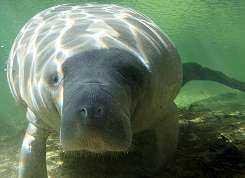
Predicted this one as well. Now the doors are open to developers, hunters, boaters, etc.
For more on the Manatee and how you can help protect it, visit the Save the Manatee Club at http://www.savethemanatee.org/
Article:
State shuffles animals on protection lists
http://www.news-journalonline.com/NewsJournalOnline/
News/Headlines/frtHEAD01060806.htm
Protests don't sway wildlife commission
By VIRGINIA SMITH
Staff Writer
WEST PALM BEACH -- Unmoved by the waving of manatee flags, tearful pleas and heirloom china broken in protest, the Florida Fish and Wildlife Conservation Commission on Wednesday voted unanimously to downgrade the Florida manatee from endangered, a title it has held for more than 30 years, to threatened.
The change came as a result of a scientific review that showed Florida's approximately 3,000 manatees to be increasing in some locations, declining or stable in others, and not facing an immediate risk of extinction.
Commissioners also moved Wednesday to de-list the bald eagle, declare the Panama City crayfish threatened, and upgrade the gopher tortoise from a species of special concern to threatened.
The bald eagle's removal was met with little protest, and the crayfish's and the gopher tortoise's upgrades were widely applauded.
In the manatee's case, only fishermen and representatives of boating and dock-building interests spoke in support of a change. Five years ago, said Ted Forsgren of the Coastal Conservation Association, a fishermen's organization, "groups were claiming the manatee to be on the brink of extinction and that's false."
The commission says the threatened designation won't result in reduced protections for manatees, and until it approves a formal management plan, a process that will take at least until 2007, the manatee keeps its status under Florida law as endangered. Its endangered designation under federal law won't be affected.
But advocates for sea cows fear that public perception will be affected, and on Wednesday the fruits of their efforts to delay the change ranged from the purely logical -- arguing that the state's system for evaluating threat is flawed -- to the flat-out theatrical.
Lee County resident Virginia Splitt, one of more than 50 people to address the commission on the manatee issue, presented its seven members with something wrapped in pink tissue paper. After assuring one skeptical commissioner that it would not explode, she crushed the object (an antique porcelain pitcher) with her foot, likening it to a manatee hit by a boat.
More pointed objections were raised by representatives of Florida environmental and animal-rights groups. Last week 17 of them, including the Save the Manatee Club, signed a petition saying the state had set the bar for endangerment too high and moved prematurely to downgrade the manatee.
And they asked the commission to delay any change until, at the very least, a controversy over wording is resolved.
Florida's three-tiered system for classifying species, adopted in 1999, is modeled after the World Conservation Union's internationally recognized standards, but differs in one important way: The names don't match up.
What the international group calls critically endangered, Florida calls endangered, and what the group calls endangered, Florida calls merely threatened. (A third international category, vulnerable, matches the state's species of special concern). If Florida had adopted the international group's names as well as its standards, manatees would still be called endangered.
Manatee advocates feel the endangered label is essential to keeping sea cow protections from being eroded, but commissioners disagreed.
"The key is the management plan," said Herky Huffman of Enterprise. "If you don't have a good plan you can call them 'endangered-endangered-endangered' and it won't matter."
"Going from 1,200 manatees a couple decades ago to 3,200 today and calling them 'endangered' is confusing to me," said commissioner Brian Yablonski of Tallahassee. "When someone hears the term 'threatened,' it doesn't mean 'happy campers.' "
Judith Vallee, executive director of the Save the Manatee Club, said her group would work on the state's new management plan for manatees, but it would also consider measures, including litigation, to force the state to adopt the international names.
"We'll look at everything in our toolbox," Vallee said. "Whatever legal remedies we have."
Ask For Maximum Sentence for Premeditated Dog Killers
Normally I do not ask people to take action. This case though is disturbing and it’s easy to simply go to the electronic petition. The link can be found below.
On May 31, 2006, two young pit bulls were found dead on a small path
near the town's firing range.
They had been shot 37 times.
With two high-powered rifles in the back of their car, two men drove
their victims to a desolate dirt road at the edge of a wooded area of Cape
Cod. Then, police said, Todd A. Soderberg and Keith B. Kynock let their
victims go, watching them flee for safety, 40 feet, then 50 feet down the road,
before the two lowered their rifles and opened fire. After allegedly firing
37 rounds, their victims lay dead, their bodies shattered from the rifle blasts.
''This was an execution,'' Barnstable police Sgt. Sean Sweeney said.
''This was not a humane act in any way.''
We are not only outraged at this cowardly act of premeditated brutal
and cold blooded murder, but that they pleaded NOT guilty! Aside from the
weapons charges, the items found in one vehicle denotes these men had
other intentions besides the premeditated murder of the two Pit Bulls.
We, the People, respectfully ask that each man be convicted on two counts of
felony and serve the maximum allowed by the laws of MA.
PLEASE SIGN THE PETITION "Public Appeals for Maximum Sentencing of
Premeditated Dog Killers", THEN PASS IT ON!
http://www.thepetitionsite.com/takeaction/779161782
This petition is time sensitive, ie...ending July 5th, 2006. These men
are to appear in court on July 11.
On May 31, 2006, two young pit bulls were found dead on a small path
near the town's firing range.
They had been shot 37 times.
With two high-powered rifles in the back of their car, two men drove
their victims to a desolate dirt road at the edge of a wooded area of Cape
Cod. Then, police said, Todd A. Soderberg and Keith B. Kynock let their
victims go, watching them flee for safety, 40 feet, then 50 feet down the road,
before the two lowered their rifles and opened fire. After allegedly firing
37 rounds, their victims lay dead, their bodies shattered from the rifle blasts.
''This was an execution,'' Barnstable police Sgt. Sean Sweeney said.
''This was not a humane act in any way.''
We are not only outraged at this cowardly act of premeditated brutal
and cold blooded murder, but that they pleaded NOT guilty! Aside from the
weapons charges, the items found in one vehicle denotes these men had
other intentions besides the premeditated murder of the two Pit Bulls.
We, the People, respectfully ask that each man be convicted on two counts of
felony and serve the maximum allowed by the laws of MA.
PLEASE SIGN THE PETITION "Public Appeals for Maximum Sentencing of
Premeditated Dog Killers", THEN PASS IT ON!
http://www.thepetitionsite.com/takeaction/779161782
This petition is time sensitive, ie...ending July 5th, 2006. These men
are to appear in court on July 11.
Wednesday, June 07, 2006
HSUS Has Filed a Notice of Intent to Sue Hudson Valley Foie Gras for More Than 900 Documented Violations of the Federal Clean Water Act
Excellent move. This not only exposes the cruelty of Foie Gras, but also how it touches on the environment.
For those who don’t know, foie gras is essentially the liver from a dead duck who was force-fed via a tube overly large quantities of foods in order to increase the liver beyond its usual size. As you might imagine it’s an extremely painful process. So, essentially, it’s hell on earth for them, and then they’re slaughtered. Quite a life.
More information on foie gras can be found at: http://www.nofoiegras.org/
Article:
Foie Gras Claim Alleges 900 Violations Of Clear Water Act
http://www.northcountrygazette.org/
articles/060606FoieGrasClaim.html
WASHINGTON--The Humane Society of the United States (HSUS) has filed a notice of intent to sue Hudson Valley Foie Gras for more than 900 documented violations of the federal Clean Water Act. Such notice is required under the Clean Water Act before suit may be filed in federal court.
Last month, the State of New York granted Hudson Valley Foie Gras more than $400,000 in taxpayer funds to expand its facility that violently force-feeds birds to produce foie gras-a paté made from the diseased livers of ducks and geese. State officials publicly defended that decision by claiming that the factory farm is in compliance with all applicable state laws. http://www.northcountrygazette.org/
articles/052706InhumanePractice.html
However, in the legal notice filed Tuesday with Hudson Valley Foie Gras, the U.S. Environmental Protection Agency, and New York State Department of Environmental Conservation, the HSUS documents Hudson Valley Foie Gras's alleged longstanding track record of polluting the state's waters in violation of the Clean Water Act. According to the State's own records compiled from Hudson Valley's monitoring reports, the facility has allegedly committed more than 900 known violations of federal and state environmental laws since 2001, including illegal discharges of chlorine, fecal coliform, and ammonia into the Middle Mongaup River. Since the incidents are self-reported, the factory farm may have also caused other unreported discharges and violations.
"The State of New York apparently thinks that more than 900 violations of the Clean Water Act constitute full compliance with applicable law," stated Jonathan R. Lovvorn, vice president of Animal Protection Litigation for The HSUS. "It's inexcusable for the State to be funding a facility that not only cruelly force-feeds animals, but also flouts federal and state environmental laws."
The production of foie gras is one of the most notorious practices in the animal agribusiness industry. To enlarge the birds' livers, producers force-feed them for two to four weeks, shoving a pipe down their throats two or three times each day. This can cause painful bruising, lacerations, sores, and organ rupture. The birds' livers become diseased and can enlarge more than ten times the normal size, making it difficult for the birds to move comfortably. Often, the birds are intensively confined in filthy warehouses.
In 2005, Assemblyman Jack McEneny (D-Albany) introduced a bill that would ban the practice of force-feeding ducks and geese in New York. Due to animal welfare concerns, California and more than a dozen countries have banned the production of foie gras, and Chicago recently banned its sale.
The Humane Society of the United States is the nation's largest animal protection organization with 9.5 million members and constituents. The HSUS is a mainstream voice for animals, with active programs in companion animals, disaster preparedness and response, wildlife and habitat protection, animals in research, equine protection and farm animal welfare. The HSUS protects all animals through education, investigation, litigation, legislation, advocacy and field work. The non-profit organization is based in Washington and has field representatives and offices across the country. The organization is on the web at www.hsus.org.
For those who don’t know, foie gras is essentially the liver from a dead duck who was force-fed via a tube overly large quantities of foods in order to increase the liver beyond its usual size. As you might imagine it’s an extremely painful process. So, essentially, it’s hell on earth for them, and then they’re slaughtered. Quite a life.
More information on foie gras can be found at: http://www.nofoiegras.org/
Article:
Foie Gras Claim Alleges 900 Violations Of Clear Water Act
http://www.northcountrygazette.org/
articles/060606FoieGrasClaim.html
WASHINGTON--The Humane Society of the United States (HSUS) has filed a notice of intent to sue Hudson Valley Foie Gras for more than 900 documented violations of the federal Clean Water Act. Such notice is required under the Clean Water Act before suit may be filed in federal court.
Last month, the State of New York granted Hudson Valley Foie Gras more than $400,000 in taxpayer funds to expand its facility that violently force-feeds birds to produce foie gras-a paté made from the diseased livers of ducks and geese. State officials publicly defended that decision by claiming that the factory farm is in compliance with all applicable state laws. http://www.northcountrygazette.org/
articles/052706InhumanePractice.html
However, in the legal notice filed Tuesday with Hudson Valley Foie Gras, the U.S. Environmental Protection Agency, and New York State Department of Environmental Conservation, the HSUS documents Hudson Valley Foie Gras's alleged longstanding track record of polluting the state's waters in violation of the Clean Water Act. According to the State's own records compiled from Hudson Valley's monitoring reports, the facility has allegedly committed more than 900 known violations of federal and state environmental laws since 2001, including illegal discharges of chlorine, fecal coliform, and ammonia into the Middle Mongaup River. Since the incidents are self-reported, the factory farm may have also caused other unreported discharges and violations.
"The State of New York apparently thinks that more than 900 violations of the Clean Water Act constitute full compliance with applicable law," stated Jonathan R. Lovvorn, vice president of Animal Protection Litigation for The HSUS. "It's inexcusable for the State to be funding a facility that not only cruelly force-feeds animals, but also flouts federal and state environmental laws."
The production of foie gras is one of the most notorious practices in the animal agribusiness industry. To enlarge the birds' livers, producers force-feed them for two to four weeks, shoving a pipe down their throats two or three times each day. This can cause painful bruising, lacerations, sores, and organ rupture. The birds' livers become diseased and can enlarge more than ten times the normal size, making it difficult for the birds to move comfortably. Often, the birds are intensively confined in filthy warehouses.
In 2005, Assemblyman Jack McEneny (D-Albany) introduced a bill that would ban the practice of force-feeding ducks and geese in New York. Due to animal welfare concerns, California and more than a dozen countries have banned the production of foie gras, and Chicago recently banned its sale.
The Humane Society of the United States is the nation's largest animal protection organization with 9.5 million members and constituents. The HSUS is a mainstream voice for animals, with active programs in companion animals, disaster preparedness and response, wildlife and habitat protection, animals in research, equine protection and farm animal welfare. The HSUS protects all animals through education, investigation, litigation, legislation, advocacy and field work. The non-profit organization is based in Washington and has field representatives and offices across the country. The organization is on the web at www.hsus.org.
Protesters Have Frustrated an Attempt to Transport Eight Elephants from Thailand to Australian Zoos
An interesting fight. Again, raising awarnedness that the issues of zoos affects all countries.
Article:
Thai protests stop elephant move
http://news.bbc.co.uk/2/hi/asia-pacific/5054468.stm
Protesters have frustrated an attempt to transport eight elephants from Thailand to Australian zoos.
Activists staged a blockade for almost 24 hours at a quarantine centre in Kanchanaburi in western Thailand, where the animals are being kept.
The protesters say the Asian elephants, which are an endangered species, will suffer if kept in captivity.
But an Australian zoo official said the transfer was part of a joint deal with Thailand to help conserve wildlife.
"I am perplexed and surprised that this would happen, given that we had complete agreement between our governments and have been so fully committed to our long-term relationship to contribute to vital wildlife conservation projects in Thailand," said Guy Cooper, head of the Consortium of Australasian Zoos.
I haven't slept a wink, but I'm not giving up
Soraida Salwala, activist
But activists in both countries say the elephants will suffer and should not be moved.
"Keeping elephants in zoos is simply cruel," said Hugh Wirth, president of Australia's Royal Society for the Prevention of Cruelty to Animals.
Soraida Salwala, founder of the Thai group Friends of the Asian Elephant, said the animals would suffer in the confines of the zoos and that the programme would not help to conserve the species.
Long delays
There have been protests in both Thailand and Australia
The transfer had already been held up for more than a year as animal rights groups fought against the move.
However, an Australian tribunal approved the transfer in February as long as certain conditions were met, such as appropriate flooring.
Mr Cooper said the zoos in Sydney and Melbourne had been renovated accordingly.
Taronga Zoo in Sydney had spent A$40m ($30m) on a new enclosure with hot and cold bathing areas, an elephant exercise area, waterfalls and ponds and specially designed "sleeping mounds".
Australian Environment Minister Ian Campbell has said the breeding program would help to ensure the survival of the species.
Mr Campbell said that with fewer than 50,000 Asian elephants remaining in the wild, "every attempt must be made to ensure the survival of the species, including through captive breeding programs," AP news agency reported.
Article:
Thai protests stop elephant move
http://news.bbc.co.uk/2/hi/asia-pacific/5054468.stm
Protesters have frustrated an attempt to transport eight elephants from Thailand to Australian zoos.
Activists staged a blockade for almost 24 hours at a quarantine centre in Kanchanaburi in western Thailand, where the animals are being kept.
The protesters say the Asian elephants, which are an endangered species, will suffer if kept in captivity.
But an Australian zoo official said the transfer was part of a joint deal with Thailand to help conserve wildlife.
"I am perplexed and surprised that this would happen, given that we had complete agreement between our governments and have been so fully committed to our long-term relationship to contribute to vital wildlife conservation projects in Thailand," said Guy Cooper, head of the Consortium of Australasian Zoos.
I haven't slept a wink, but I'm not giving up
Soraida Salwala, activist
But activists in both countries say the elephants will suffer and should not be moved.
"Keeping elephants in zoos is simply cruel," said Hugh Wirth, president of Australia's Royal Society for the Prevention of Cruelty to Animals.
Soraida Salwala, founder of the Thai group Friends of the Asian Elephant, said the animals would suffer in the confines of the zoos and that the programme would not help to conserve the species.
Long delays
There have been protests in both Thailand and Australia
The transfer had already been held up for more than a year as animal rights groups fought against the move.
However, an Australian tribunal approved the transfer in February as long as certain conditions were met, such as appropriate flooring.
Mr Cooper said the zoos in Sydney and Melbourne had been renovated accordingly.
Taronga Zoo in Sydney had spent A$40m ($30m) on a new enclosure with hot and cold bathing areas, an elephant exercise area, waterfalls and ponds and specially designed "sleeping mounds".
Australian Environment Minister Ian Campbell has said the breeding program would help to ensure the survival of the species.
Mr Campbell said that with fewer than 50,000 Asian elephants remaining in the wild, "every attempt must be made to ensure the survival of the species, including through captive breeding programs," AP news agency reported.
Asia/ Film Reveals the Drama of Tibet's Poacher War
Yes, unfortunately poaching is also a problem in Tibet.
Article:
Asia/ Film reveals the drama of Tibet's poacher war
http://www.asahi.com/english/
06/07/2006
BY AKIRA KUDOCHI, THE ASAHI SHIMBUN
Director Lu Chuan's latest film, "Kekexili: Mountain Patrol," is a far cry from his suspense-filled first effort, "The Missing Gun," released in 2002.
His newest movie is quasi-documentary. It's a plea to save the endangered Tibetan antelope--but he fears that poaching continues to reduce the wild herds across the rugged region.
"Local residents can't survive without poaching. They rely on antelope fur to make a living," the 35-year-old Chinese director said on a recent visit to Tokyo.
"Tibetan antelope furs fetch a high price. They use it for luxurious coats and other items," he explained.
The director says Tibet's low standard of living forces many people into poaching.
Lu's film, released in China in 2004, is based on the true story of two volunteer mountain rangers who died while battling poachers in the Kekexili area on the Tibetan Plateau. It opened in Japan over the weekend.
With his second film, Lu decided he wanted to tackle a more powerful theme.
He read a report of how poachers had murdered one leader of the rangers who had interfered with their antelope hunts. The second leader also died in similar circumstances.
"Why did they risk their lives to protect Tibetan antelopes? I wanted to find out by making this movie. I wanted to shoot a drama of human life," Lu said.
Lu and his film crew spent six months on the low-oxygen plateau, which sits 4,700 meters above sea level. Actors re-enacted scenes along the same route followed by the rangers. Real rangers advised on the events that took place amid the rugged terrain.
The movie has raised awareness of the need to protect Tibetan antelopes.
The government passed several measures to protect the animals, and today, the herds are gradually recovering.
Still, Lu said, "Poaching has not yet been eradicated."(IHT/Asahi: June 7,2006)
Article:
Asia/ Film reveals the drama of Tibet's poacher war
http://www.asahi.com/english/
06/07/2006
BY AKIRA KUDOCHI, THE ASAHI SHIMBUN
Director Lu Chuan's latest film, "Kekexili: Mountain Patrol," is a far cry from his suspense-filled first effort, "The Missing Gun," released in 2002.
His newest movie is quasi-documentary. It's a plea to save the endangered Tibetan antelope--but he fears that poaching continues to reduce the wild herds across the rugged region.
"Local residents can't survive without poaching. They rely on antelope fur to make a living," the 35-year-old Chinese director said on a recent visit to Tokyo.
"Tibetan antelope furs fetch a high price. They use it for luxurious coats and other items," he explained.
The director says Tibet's low standard of living forces many people into poaching.
Lu's film, released in China in 2004, is based on the true story of two volunteer mountain rangers who died while battling poachers in the Kekexili area on the Tibetan Plateau. It opened in Japan over the weekend.
With his second film, Lu decided he wanted to tackle a more powerful theme.
He read a report of how poachers had murdered one leader of the rangers who had interfered with their antelope hunts. The second leader also died in similar circumstances.
"Why did they risk their lives to protect Tibetan antelopes? I wanted to find out by making this movie. I wanted to shoot a drama of human life," Lu said.
Lu and his film crew spent six months on the low-oxygen plateau, which sits 4,700 meters above sea level. Actors re-enacted scenes along the same route followed by the rangers. Real rangers advised on the events that took place amid the rugged terrain.
The movie has raised awareness of the need to protect Tibetan antelopes.
The government passed several measures to protect the animals, and today, the herds are gradually recovering.
Still, Lu said, "Poaching has not yet been eradicated."(IHT/Asahi: June 7,2006)
Tuesday, June 06, 2006
Group Sues Woodland Park Zoo Over Treatment of Elephant Named Bamboo: Lawsuit Demands She Be Moved To Elephant Sanctuary in Tennessee
This is an amazing legal tactic. Very sad to see that she has been in captivity since age 1 and that she hasn’t been accepted by any other elephant groups. The logical step would be to move her to the sanctuary.
Article:
Animal-rights group sues zoo over elephant
Bamboo should be sent to a sanctuary, plaintiffs say
http://seattlepi.nwsource.com/local/272885_bamboo06.html
By KATHY MULADY
P-I REPORTER
Woodland Park Zoo has harmed a 39-year-old Asian elephant named Bamboo and should move her to an elephant sanctuary in Tennessee, an animal-rights group said in a lawsuit filed Monday.
In the King County Superior Court suit, the Northwest Animal Rights Network claims that the zoo has failed to provide Bamboo space for roaming, foraging and bonding with other elephants.
"We just received it, it is going to our legal counsel," Gigi Allianic, a zoo spokeswoman, said of the suit. "We can't discuss it right now."
Bamboo, who had lived at Woodland Park Zoo since her arrival from Thailand when she was a year old, was transferred last summer to Point Defiance Zoo in Tacoma because she wasn't getting along with the other elephants at Woodland Park, especially Hansa, the 5-year-old elephant born there.
But zoo officials announced recently that Bamboo would be returning to Seattle soon because the other elephants in Tacoma haven't accepted her.
Animal-rights activists and two Seattle residents representing city taxpayers filed the lawsuit, saying it is time for Bamboo to move to the 2,700-acre sanctuary in Tennessee. The city owns the zoo grounds and buildings and provides financial support for the zoo.
The lawsuit also alleges that the zoo and the city have violated city, state and federal laws in their care of Bamboo.
Diana Kantor, a member of the animal-rights group, said they were hoping to persuade zoo and city leaders to move Bamboo to the sanctuary without filing a lawsuit.
"We worked hard for a resolution, but got nowhere with the zoo or city; finally, we had to take the next step," Kantor said.
In March, Woodland Park Deputy Director Bruce Bohmke said zoo officials were evaluating what to do in the long term with Bamboo. Alternatives included keeping her indefinitely at Woodland Park or moving her to a suitable zoo that would best serve her interests.
Bohmke said at the time that sending Bamboo to an elephant sanctuary was not an option. He said the sanctuary isn't appropriate for an elephant in the care of an accredited zoo at which conservation and education are key elements.
One of the plaintiffs in the lawsuit is Sally Gannett, who as a youngster won a contest to name the elephant. "I feel responsible for Bamboo and want to help her get to the better life that she deserves," Gannett said.
Article:
Animal-rights group sues zoo over elephant
Bamboo should be sent to a sanctuary, plaintiffs say
http://seattlepi.nwsource.com/local/272885_bamboo06.html
By KATHY MULADY
P-I REPORTER
Woodland Park Zoo has harmed a 39-year-old Asian elephant named Bamboo and should move her to an elephant sanctuary in Tennessee, an animal-rights group said in a lawsuit filed Monday.
In the King County Superior Court suit, the Northwest Animal Rights Network claims that the zoo has failed to provide Bamboo space for roaming, foraging and bonding with other elephants.
"We just received it, it is going to our legal counsel," Gigi Allianic, a zoo spokeswoman, said of the suit. "We can't discuss it right now."
Bamboo, who had lived at Woodland Park Zoo since her arrival from Thailand when she was a year old, was transferred last summer to Point Defiance Zoo in Tacoma because she wasn't getting along with the other elephants at Woodland Park, especially Hansa, the 5-year-old elephant born there.
But zoo officials announced recently that Bamboo would be returning to Seattle soon because the other elephants in Tacoma haven't accepted her.
Animal-rights activists and two Seattle residents representing city taxpayers filed the lawsuit, saying it is time for Bamboo to move to the 2,700-acre sanctuary in Tennessee. The city owns the zoo grounds and buildings and provides financial support for the zoo.
The lawsuit also alleges that the zoo and the city have violated city, state and federal laws in their care of Bamboo.
Diana Kantor, a member of the animal-rights group, said they were hoping to persuade zoo and city leaders to move Bamboo to the sanctuary without filing a lawsuit.
"We worked hard for a resolution, but got nowhere with the zoo or city; finally, we had to take the next step," Kantor said.
In March, Woodland Park Deputy Director Bruce Bohmke said zoo officials were evaluating what to do in the long term with Bamboo. Alternatives included keeping her indefinitely at Woodland Park or moving her to a suitable zoo that would best serve her interests.
Bohmke said at the time that sending Bamboo to an elephant sanctuary was not an option. He said the sanctuary isn't appropriate for an elephant in the care of an accredited zoo at which conservation and education are key elements.
One of the plaintiffs in the lawsuit is Sally Gannett, who as a youngster won a contest to name the elephant. "I feel responsible for Bamboo and want to help her get to the better life that she deserves," Gannett said.
Hell Freezes Over: Fudan University in China Seeks To Set Up City's First Animal Ethics Committee to Address the Welfare of Lab Animals
If this is true, and not just pr, then it’s a good FIRST step. There is still much to do. But, this is a good sign in a county notorious for its horrible treatment of animals.
See this past posting for proof of China’s horrible animal rights record. http://geari.blogspot.com/2006/03/crash-
course-in-unbelievable-cruelty.html
Article:
Fudan's panel to safeguard rights of laboratory animals
http://www.shanghaidaily.com/art/2006/06/03/281839/
Fudan__039_s_panel_to_safeguard_rights_of_laboratory_
animals.htm
Yan Zhen
2006-06-03
FUDAN University has set up the city's first animal ethics committee to protect the welfare and rights of laboratory animals, university officials said yesterday.
Researchers and teachers must apply in advance to the animal ethics committee and receive written approval before conducting experiments and research at Fudan's pharmaceutical college.
The decision was effective June 1.
Concerned medical students and animal rights activists have urged the university to build a memorial to the many animals that have suffered and died for science in work on campus.
A similar committee has been set up for animal research in Beijing.
Those involved in experiments and animal care are expected to receive training in appropriate animal treatment that meets an international code of ethics.
Standards include giving animals enough living space, never starving or dehydrating them and killing them painlessly when necessary.
Those who violate the ethics code will be warned and could forfeit research rights, officials said.
"The organization is set up to regulate the ethical treatment of laboratory animals and bring the country's practice in line with international codes," said Cheng Nengneng, the committee director.
Medical research programs, especially pharmaceutical experiments, often involve animals - usually rats, mice, rabbits, dogs and monkeys. Thousands of rats and mice, dozens of dogs and less than 10 monkeys are used in Fudan's research programs each year, officials said.
However, lack of standards for animal treatment has put many researchers into an embarrassing position. Several professors' thesis were rejected by international academic journals as they were not certified by an animal ethics committee.
"The lack of animal protection organizations and regulations even hurt our communication with counterparts in the world," Cheng said.
The suffering of laboratory animals and separate maltreatment scandals have been reported in recent years. An online video showed a high-heeled women in Heilongjiang Province stomping kittens to death in March.
Cruelty to animals has caused indignation and raised awareness in a country where pets are increasingly popular.
See this past posting for proof of China’s horrible animal rights record. http://geari.blogspot.com/2006/03/crash-
course-in-unbelievable-cruelty.html
Article:
Fudan's panel to safeguard rights of laboratory animals
http://www.shanghaidaily.com/art/2006/06/03/281839/
Fudan__039_s_panel_to_safeguard_rights_of_laboratory_
animals.htm
Yan Zhen
2006-06-03
FUDAN University has set up the city's first animal ethics committee to protect the welfare and rights of laboratory animals, university officials said yesterday.
Researchers and teachers must apply in advance to the animal ethics committee and receive written approval before conducting experiments and research at Fudan's pharmaceutical college.
The decision was effective June 1.
Concerned medical students and animal rights activists have urged the university to build a memorial to the many animals that have suffered and died for science in work on campus.
A similar committee has been set up for animal research in Beijing.
Those involved in experiments and animal care are expected to receive training in appropriate animal treatment that meets an international code of ethics.
Standards include giving animals enough living space, never starving or dehydrating them and killing them painlessly when necessary.
Those who violate the ethics code will be warned and could forfeit research rights, officials said.
"The organization is set up to regulate the ethical treatment of laboratory animals and bring the country's practice in line with international codes," said Cheng Nengneng, the committee director.
Medical research programs, especially pharmaceutical experiments, often involve animals - usually rats, mice, rabbits, dogs and monkeys. Thousands of rats and mice, dozens of dogs and less than 10 monkeys are used in Fudan's research programs each year, officials said.
However, lack of standards for animal treatment has put many researchers into an embarrassing position. Several professors' thesis were rejected by international academic journals as they were not certified by an animal ethics committee.
"The lack of animal protection organizations and regulations even hurt our communication with counterparts in the world," Cheng said.
The suffering of laboratory animals and separate maltreatment scandals have been reported in recent years. An online video showed a high-heeled women in Heilongjiang Province stomping kittens to death in March.
Cruelty to animals has caused indignation and raised awareness in a country where pets are increasingly popular.
Group Shows Cruelty of Zoos Has No Boarders: Protests at Manila Zoo
Good article for a couple of reasons. One, it shows the movement exposing zoos in crossing oceans and boarders. And two, it gives a few good insights as to why zoos are bad. Here’s a quick quote from the article below:
“Animals in the wild spend their entire lives with their close-knit families. But animals in zoos are separated from their families as babies and are sentenced to an eternity of boredom, crippling loneliness, and even abuse, leading to self-mutilation and other abnormal and self-destructive behaviors, called “zoochosis.”” Here is a definition of zoochosis - http://www.bornfree.org.uk/zoocheck/zoochosis.htm
Article:
Animal rights group bats for freedom of zoo creatures
http://www.sunstar.com.ph/static/man/2006/06/
06/feat/animal.rights.
group.bats.for.freedom.of.zoo.creatures.html
WEARING prison suits and monkey masks and holding a banner and signs that read “Zoos: Cruel Animal Prisons,” members of People for the Ethical Treatment of Animals (Peta) Asia-Pacific will protest outside the Manila Zoo. The protest comes as Filipinos prepare to mark their 108th year of independence from Spanish colonizers on June 12, and Peta is urging the first democracy in Asia to again lead the way by becoming the first zoo-free country in the region:
Why is Peta in an uproar? Animals in the wild spend their entire lives with their close-knit families. But animals in zoos are separated from their families as babies and are sentenced to an eternity of boredom, crippling loneliness, and even abuse, leading to self-mutilation and other abnormal and self-destructive behaviors, called “zoochosis.”
“Zoos claim to educate people and preserve species, but they fall short on both counts,” says Peta Asia-Pacific Campaigns Manager Rochelle Regodon. “Zoos present us with a distorted view of wildlife. Even the biggest zoo is nothing compared to the vastness of the wild. Visitors don’t see normal animal behavior because their natural needs—space, exercise, privacy, and mental stimulation —aren’t met. We’re better off watching nature documentaries, reading about animals in books or on Web sites, or traveling to their natural habitats.”
The Manila Zoo has an elephant isolated in a concrete enclosure with little grass. Elephants can walk up to 48 kilometers every day in the wild—but the entire zoo measures 5.5 hectares, or 0.055 square kilometers.
“Animals in zoos are serving a lifetime sentence with no parole,” says Regodon. “Let’s just leave them in the wild and use zoos as sanctuaries for animals rescued from circuses, marine parks, and other exploitative forms of entertainment.”
Peta Asia-Pacific is an affiliate of Peta, the world’s largest animal rights organization, with more than 1 million members and supporters worldwide.
“Animals in the wild spend their entire lives with their close-knit families. But animals in zoos are separated from their families as babies and are sentenced to an eternity of boredom, crippling loneliness, and even abuse, leading to self-mutilation and other abnormal and self-destructive behaviors, called “zoochosis.”” Here is a definition of zoochosis - http://www.bornfree.org.uk/zoocheck/zoochosis.htm
Article:
Animal rights group bats for freedom of zoo creatures
http://www.sunstar.com.ph/static/man/2006/06/
06/feat/animal.rights.
group.bats.for.freedom.of.zoo.creatures.html
WEARING prison suits and monkey masks and holding a banner and signs that read “Zoos: Cruel Animal Prisons,” members of People for the Ethical Treatment of Animals (Peta) Asia-Pacific will protest outside the Manila Zoo. The protest comes as Filipinos prepare to mark their 108th year of independence from Spanish colonizers on June 12, and Peta is urging the first democracy in Asia to again lead the way by becoming the first zoo-free country in the region:
Why is Peta in an uproar? Animals in the wild spend their entire lives with their close-knit families. But animals in zoos are separated from their families as babies and are sentenced to an eternity of boredom, crippling loneliness, and even abuse, leading to self-mutilation and other abnormal and self-destructive behaviors, called “zoochosis.”
“Zoos claim to educate people and preserve species, but they fall short on both counts,” says Peta Asia-Pacific Campaigns Manager Rochelle Regodon. “Zoos present us with a distorted view of wildlife. Even the biggest zoo is nothing compared to the vastness of the wild. Visitors don’t see normal animal behavior because their natural needs—space, exercise, privacy, and mental stimulation —aren’t met. We’re better off watching nature documentaries, reading about animals in books or on Web sites, or traveling to their natural habitats.”
The Manila Zoo has an elephant isolated in a concrete enclosure with little grass. Elephants can walk up to 48 kilometers every day in the wild—but the entire zoo measures 5.5 hectares, or 0.055 square kilometers.
“Animals in zoos are serving a lifetime sentence with no parole,” says Regodon. “Let’s just leave them in the wild and use zoos as sanctuaries for animals rescued from circuses, marine parks, and other exploitative forms of entertainment.”
Peta Asia-Pacific is an affiliate of Peta, the world’s largest animal rights organization, with more than 1 million members and supporters worldwide.
Monday, June 05, 2006
Asian Elephants Used In the Ringling Brothers and Barnum and Bailey Circus at Heart of Trial: Groups Prove Violations of Endangered Species Act
Asian Elephants Used In the Ringling Brothers and Barnum and Bailey Circus at Heart of Trial: Groups Fight to Prove Various Violations of Endangered Species Act
This is a ground breaking case. If successful, it could mean an end to the use of elephants in circuses. Here is a quick synopsis of the argument. The story can be found below it:
“They allege that the use of sharpened hooks by trainers, the routine use of chains, the separation of baby elephants from their mothers and other common circus practices add up to an egregious violation of the Endangered Species Act, which covers the Asian elephant and prohibits harm to it. The suit's goal is a court order halting these practices, which the activists believe would force Ringling to give up elephants altogether.
"It's impossible to have these animals in captivity the way they are without it leading to abuse — traveling in chains in boxcars up to 50 weeks, performing tricks because of force and intimidation," said Michelle Thew of the Animal Protection Institute, another plaintiff.”
Article:
Ringling Bros. battles to keep elephants
http://news.yahoo.com/news?tmpl=story&cid=519&ncid
=519&e=1&u=/ap/20060603/ap_on_re_us/ringling_s_
elephants_1
By DAVID CRARY, AP National Writer Sat Jun 3, 2:02 PM ET
NEW YORK - With their colorful headgear and repertoire of tricks, they're top-billed stars of The Greatest Show on Earth.
ADVERTISEMENT
But away from the arena, the Asian elephants used in the Ringling Bros. and Barnum & Bailey Circus are at the heart of perhaps the most bitter animal-care fight around, one that's dragged through court for six years already and is inching toward a trial.
It's a heavyweight bout, pitting America's biggest circus against some of the most influential animal-welfare groups. Ringling insists that its elephants receive state-of-the-art treatment and it's determined to keep them in its cast.
Its adversaries — a group including the Humane Society of the United States, the American Society for the Prevention of Cruelty to Animals and the Animal Welfare Institute — argue vehemently that circus life is inherently cruel to the elephants.
They allege that the use of sharpened hooks by trainers, the routine use of chains, the separation of baby elephants from their mothers and other common circus practices add up to an egregious violation of the Endangered Species Act, which covers the Asian elephant and prohibits harm to it. The suit's goal is a court order halting these practices, which the activists believe would force Ringling to give up elephants altogether.
"It's impossible to have these animals in captivity the way they are without it leading to abuse — traveling in chains in boxcars up to 50 weeks, performing tricks because of force and intimidation," said Michelle Thew of the Animal Protection Institute, another plaintiff.
Ringling shows no signs of bowing to pressure, and has become more outspoken in defending itself since the first-of-its-kind suit was filed in 2000.
"We train animals through reward, repetition and reinforcement — based on science," said former zookeeper Bruce Read, Ringling's vice president for animal stewardship. "Punishment is not used in the circus."
While the lawsuit protests the use of sharp-ended bullhooks to prod the elephants, Read defends them as "a very accepted tool" developed over many centuries to control the animals humanely. Activists say the implements — which resemble long fire pokers — often inflict scar-causing wounds.
Government regulations permit use of chains. Read said elephants are chained in place at night to keep them from foraging their companions' food, and during train rides to prevent sudden weight shifts that might derail the freight car.
More generally, Read said circus life — including 50 weeks a year on the road — is not stressful to the elephants because the social groups around them, animal and human, are stable. He said young elephants aren't separated from their mothers until trainers are confident of their maturity.
"The Asian elephant has been semi-domesticated for centuries," said Read, citing its use in warfare, farming and various ceremonies. "Our circus brings them to areas where people don't see such animals very often. That's not something we should deprive our future generations of."
The first phase of the lawsuit lasted three years, with Feld Entertainment Inc. — Ringling's parent company — finally losing a bid to have the case dismissed by a federal court in Washington, D.C. Since 2003, the two sides have engaged in a slow-moving battle over the plaintiffs' access to thousands of Ringling veterinary documents and in-house videos.
"They repeatedly claim that their elephants are healthy and well-treated, yet when we ask for documents that would prove that, they fight us tooth and nail in court," said attorney Jonathan Lovvorn, the Humane Society's vice president for animal protection litigation. He expects the case will go to trial next year.
The lawsuit has coincided with protest campaigns urging a boycott of circuses that feature animals at a time when others, such as Cirque du Soleil, have developed animal-free productions. Fifteen U.S. municipalities, but no major cities, ban animal circuses.
Virginia-based Feld Entertainment is privately held and doesn't disclose circus revenue figures, thus depriving critics of any evidence that the protests might be taking a toll.
"Animal rights groups find they get more attention for their cause when they go after The Greatest Show On Earth," said Feld spokeswoman Amy McWethy. "But according to our research and customer feedback surveys, activists have had no impact on the decision to attend."
She said annual attendance at Ringling's circuses is more than 10 million, and audience surveys rate elephants as by far the favorite attraction.
Of Ringling's 55 elephants, up to 20 are touring at any one time in the three circus units. Most of the others live at Ringling's Center for Elephant Conservation, a $5 million, 200-acre facility in central Florida that doubles as retirement home and breeding center.
The principal referee in the dispute over Ringling's elephants is the U.S.
Department of Agriculture. Numerous times, agency inspectors have found Ringling in noncompliance of the Animal Welfare Act, but the circus — to the dismay of activists — each time was able to take steps that spared it from being formally classified as a violator.
USDA spokesman Darby Holladay said four investigations into Ringling's animal care remain open, but he wouldn't provide details. Activists say at least two of the investigations involve deaths of young elephants at the Florida conservation center.
Ted Friend, an animal science professor at Texas A&M, said he and his students have traveled with Ringling for research projects and have never observed "overt cruelty" by trainers or handlers. Friend attributes the anti-Ringling campaign to competition among animal-welfare groups for publicity and contributions.
"This isn't about fundraising — it's about getting the truth to the public," retorted Michelle Thew. "Ringling Bros. is going to lose not only in court but in the court of public opinion."
___
On the Net:
Animal Welfare Institute:
http://www.awionline.org/wildlife/elephants/rbsuit.htm
This is a ground breaking case. If successful, it could mean an end to the use of elephants in circuses. Here is a quick synopsis of the argument. The story can be found below it:
“They allege that the use of sharpened hooks by trainers, the routine use of chains, the separation of baby elephants from their mothers and other common circus practices add up to an egregious violation of the Endangered Species Act, which covers the Asian elephant and prohibits harm to it. The suit's goal is a court order halting these practices, which the activists believe would force Ringling to give up elephants altogether.
"It's impossible to have these animals in captivity the way they are without it leading to abuse — traveling in chains in boxcars up to 50 weeks, performing tricks because of force and intimidation," said Michelle Thew of the Animal Protection Institute, another plaintiff.”
Article:
Ringling Bros. battles to keep elephants
http://news.yahoo.com/news?tmpl=story&cid=519&ncid
=519&e=1&u=/ap/20060603/ap_on_re_us/ringling_s_
elephants_1
By DAVID CRARY, AP National Writer Sat Jun 3, 2:02 PM ET
NEW YORK - With their colorful headgear and repertoire of tricks, they're top-billed stars of The Greatest Show on Earth.
ADVERTISEMENT
But away from the arena, the Asian elephants used in the Ringling Bros. and Barnum & Bailey Circus are at the heart of perhaps the most bitter animal-care fight around, one that's dragged through court for six years already and is inching toward a trial.
It's a heavyweight bout, pitting America's biggest circus against some of the most influential animal-welfare groups. Ringling insists that its elephants receive state-of-the-art treatment and it's determined to keep them in its cast.
Its adversaries — a group including the Humane Society of the United States, the American Society for the Prevention of Cruelty to Animals and the Animal Welfare Institute — argue vehemently that circus life is inherently cruel to the elephants.
They allege that the use of sharpened hooks by trainers, the routine use of chains, the separation of baby elephants from their mothers and other common circus practices add up to an egregious violation of the Endangered Species Act, which covers the Asian elephant and prohibits harm to it. The suit's goal is a court order halting these practices, which the activists believe would force Ringling to give up elephants altogether.
"It's impossible to have these animals in captivity the way they are without it leading to abuse — traveling in chains in boxcars up to 50 weeks, performing tricks because of force and intimidation," said Michelle Thew of the Animal Protection Institute, another plaintiff.
Ringling shows no signs of bowing to pressure, and has become more outspoken in defending itself since the first-of-its-kind suit was filed in 2000.
"We train animals through reward, repetition and reinforcement — based on science," said former zookeeper Bruce Read, Ringling's vice president for animal stewardship. "Punishment is not used in the circus."
While the lawsuit protests the use of sharp-ended bullhooks to prod the elephants, Read defends them as "a very accepted tool" developed over many centuries to control the animals humanely. Activists say the implements — which resemble long fire pokers — often inflict scar-causing wounds.
Government regulations permit use of chains. Read said elephants are chained in place at night to keep them from foraging their companions' food, and during train rides to prevent sudden weight shifts that might derail the freight car.
More generally, Read said circus life — including 50 weeks a year on the road — is not stressful to the elephants because the social groups around them, animal and human, are stable. He said young elephants aren't separated from their mothers until trainers are confident of their maturity.
"The Asian elephant has been semi-domesticated for centuries," said Read, citing its use in warfare, farming and various ceremonies. "Our circus brings them to areas where people don't see such animals very often. That's not something we should deprive our future generations of."
The first phase of the lawsuit lasted three years, with Feld Entertainment Inc. — Ringling's parent company — finally losing a bid to have the case dismissed by a federal court in Washington, D.C. Since 2003, the two sides have engaged in a slow-moving battle over the plaintiffs' access to thousands of Ringling veterinary documents and in-house videos.
"They repeatedly claim that their elephants are healthy and well-treated, yet when we ask for documents that would prove that, they fight us tooth and nail in court," said attorney Jonathan Lovvorn, the Humane Society's vice president for animal protection litigation. He expects the case will go to trial next year.
The lawsuit has coincided with protest campaigns urging a boycott of circuses that feature animals at a time when others, such as Cirque du Soleil, have developed animal-free productions. Fifteen U.S. municipalities, but no major cities, ban animal circuses.
Virginia-based Feld Entertainment is privately held and doesn't disclose circus revenue figures, thus depriving critics of any evidence that the protests might be taking a toll.
"Animal rights groups find they get more attention for their cause when they go after The Greatest Show On Earth," said Feld spokeswoman Amy McWethy. "But according to our research and customer feedback surveys, activists have had no impact on the decision to attend."
She said annual attendance at Ringling's circuses is more than 10 million, and audience surveys rate elephants as by far the favorite attraction.
Of Ringling's 55 elephants, up to 20 are touring at any one time in the three circus units. Most of the others live at Ringling's Center for Elephant Conservation, a $5 million, 200-acre facility in central Florida that doubles as retirement home and breeding center.
The principal referee in the dispute over Ringling's elephants is the U.S.
Department of Agriculture. Numerous times, agency inspectors have found Ringling in noncompliance of the Animal Welfare Act, but the circus — to the dismay of activists — each time was able to take steps that spared it from being formally classified as a violator.
USDA spokesman Darby Holladay said four investigations into Ringling's animal care remain open, but he wouldn't provide details. Activists say at least two of the investigations involve deaths of young elephants at the Florida conservation center.
Ted Friend, an animal science professor at Texas A&M, said he and his students have traveled with Ringling for research projects and have never observed "overt cruelty" by trainers or handlers. Friend attributes the anti-Ringling campaign to competition among animal-welfare groups for publicity and contributions.
"This isn't about fundraising — it's about getting the truth to the public," retorted Michelle Thew. "Ringling Bros. is going to lose not only in court but in the court of public opinion."
___
On the Net:
Animal Welfare Institute:
http://www.awionline.org/wildlife/elephants/rbsuit.htm
Florida Fish and Wildlife Commission Will Decide Whether to Move Forward On Easing the Manatee's Status from Endangered To Threatened
Pay Back to Friends in Business.
Not good, not good at all. Especially since the commission was appointed by Jeb Bush. And, as the article states below, this is not a change that is due to science, but instead “…a change long sought by boaters and waterfront developers.” I can see where this is going.
Article:
http://www.sun-sentinel.com/news/local/southflorida/
sfl-cwildlifejun05,0,3909628.story?coll=sfla-home-headlines
State agency to consider whether to move manatees off endangered list
By David Fleshler
South Florida Sun-Sentinel
Posted June 5 2006
The state wildlife commission will decide this week whether to revise the legal status of gopher tortoises and manatees, two species that have suffered over the past few decades as people crowded into Florida.
The Florida Fish and Wildlife Conservation Commission will vote Wednesday whether to proceed with a proposal to increase the gopher tortoise's status to threatened, which could begin to limit the state's practice of allowing developers to bury thousands of the animals alive. The commission, a board appointed by Gov. Jeb Bush, will also decide whether to move forward on easing the manatee's status from endangered to threatened, a change long sought by boaters and waterfront developers.
Neither change will lead to immediate action. But the meeting, at the West Palm Beach Marriott, is expected to be contentious. Manatee advocates plan to attend to argue against the move, which they say will lead to less protection for the mammals. And animal-rights activists plan to be there to call for an end to the killing of tortoises.
For years the wildlife commission has issued permits allowing developers to crush or bury tortoises alive, provided they paid into a fund to buy and protect gopher tortoise habitat elsewhere in the state. But the commission's biologists say this system hasn't prevented the tortoise's decline, and they petitioned the commission to revise the tortoise's status to threatened. Since the European settlement of Florida, the gopher tortoise has lost about 69 percent of its habitat, according to a report by a state biological review panel, which recommended upgrading the tortoise's legal status.
The commission has received many letters from people horrified at news accounts of the live burial of tortoises, which have slow metabolism that allows them to survive for months before dying of thirst or starvation.
"To take a living animal and bury it, and allow it to die a slow, painful death is beyond cruel," said Steven Rosen, a Davie animal-rights activist who has filed suit to try to stop the practice. "How do they sleep at night?"
The vote Wednesday will have no immediate impact on the tortoise. But it would allow a team of biologists and state officials to prepare a management plan to help the species recover. State officials say the plan, expected to be completed in April, will propose ways to reduce the number of tortoises killed in construction projects, such as moving them to vacant habitat in the Panhandle and elsewhere. But they say there's a limit to how much the wildlife commission can do to stop tortoise killing, while respecting property rights.
"Nobody's happy that gopher tortoises are getting buried by bulldozers," said Henry Cabbage, spokesman for the wildlife commission. "But the agency's authority is not so broad that we can prohibit developers from developing land. It's an unpleasant reality gopher tortoises are getting buried, and that's something we care about. But the solution to this is very elusive. I really don't see what we could accomplish by becoming a nuisance to developers."
In a response to the state's biological review, Steve Godley, a biological consultant and representative of the Florida Home Builders Association, called the models in the biological report "poorly documented with many unstated assumptions" that didn't support the reclassification. But he wrote that the decline of tortoises could be virtually eliminated by improving the management of public lands and requiring that developers move tortoises to public and private lands.
The proposal to reclassify the manatee came in response to a petition from the Coastal Conservation Association of Florida, a recreational fishing group whose members were tired of having to endure a series of slow-speed zones to reach fishing spots. The proposal has the support of the boating and marine construction industries, which are struggling with manatee-inspired restrictions on the construction of slips, docks and other boating facilities.
The state's biological analysis supports the move, saying the species faces a low probability of extinction over the next 100 years. Since the 1970s, the report said, the manatee's population has steadily increased. But even though the report recommends removing the species' endangered tag, it recommends listing the manatee as a "threatened" species. The report says the manatee faces a 12 percent chance of declining by half over the next three generations and a 55 percent chance of losing one-fifth of its population over the next two generations.
The report said the largest known human source of manatee mortality is collisions with watercraft. Last year, ships and boats killed 80 manatees in Florida, up from 69 the year before.
Ted Forsgren, executive director of Coastal Conservation Authority, said he has no problem with legitimate speed zones that protect manatees. But he said many are unnecessary, particularly in light of the species' improved prospects. Reclassifying the manatee from endangered to threatened will lead to "a more objective examination of some of these different speed zones," he said.
"We're saltwater anglers, and we want to be able to have reasonable access to get into good fishing spots."
But environmentalists say the change reflects the political power of the boating industry, not any major change in the manatee's status. They say the reclassification results largely from the state's decision to alter its system for classifying imperiled species, a technical change that automatically knocks the manatee down a notch, creating the illusion that it is recovering. They say this will provide the state Legislature with an excuse to reduce the number of slow-speed zones and avoid funding programs to help manatees.
"We want them to be fully recovered, but that's not what this is about," said Pat Rose, director of government relations for the Save the Manatee Club. "This is a political reclassification that will lead to them being more imperiled, not less."
Not good, not good at all. Especially since the commission was appointed by Jeb Bush. And, as the article states below, this is not a change that is due to science, but instead “…a change long sought by boaters and waterfront developers.” I can see where this is going.
Article:
http://www.sun-sentinel.com/news/local/southflorida/
sfl-cwildlifejun05,0,3909628.story?coll=sfla-home-headlines
State agency to consider whether to move manatees off endangered list
By David Fleshler
South Florida Sun-Sentinel
Posted June 5 2006
The state wildlife commission will decide this week whether to revise the legal status of gopher tortoises and manatees, two species that have suffered over the past few decades as people crowded into Florida.
The Florida Fish and Wildlife Conservation Commission will vote Wednesday whether to proceed with a proposal to increase the gopher tortoise's status to threatened, which could begin to limit the state's practice of allowing developers to bury thousands of the animals alive. The commission, a board appointed by Gov. Jeb Bush, will also decide whether to move forward on easing the manatee's status from endangered to threatened, a change long sought by boaters and waterfront developers.
Neither change will lead to immediate action. But the meeting, at the West Palm Beach Marriott, is expected to be contentious. Manatee advocates plan to attend to argue against the move, which they say will lead to less protection for the mammals. And animal-rights activists plan to be there to call for an end to the killing of tortoises.
For years the wildlife commission has issued permits allowing developers to crush or bury tortoises alive, provided they paid into a fund to buy and protect gopher tortoise habitat elsewhere in the state. But the commission's biologists say this system hasn't prevented the tortoise's decline, and they petitioned the commission to revise the tortoise's status to threatened. Since the European settlement of Florida, the gopher tortoise has lost about 69 percent of its habitat, according to a report by a state biological review panel, which recommended upgrading the tortoise's legal status.
The commission has received many letters from people horrified at news accounts of the live burial of tortoises, which have slow metabolism that allows them to survive for months before dying of thirst or starvation.
"To take a living animal and bury it, and allow it to die a slow, painful death is beyond cruel," said Steven Rosen, a Davie animal-rights activist who has filed suit to try to stop the practice. "How do they sleep at night?"
The vote Wednesday will have no immediate impact on the tortoise. But it would allow a team of biologists and state officials to prepare a management plan to help the species recover. State officials say the plan, expected to be completed in April, will propose ways to reduce the number of tortoises killed in construction projects, such as moving them to vacant habitat in the Panhandle and elsewhere. But they say there's a limit to how much the wildlife commission can do to stop tortoise killing, while respecting property rights.
"Nobody's happy that gopher tortoises are getting buried by bulldozers," said Henry Cabbage, spokesman for the wildlife commission. "But the agency's authority is not so broad that we can prohibit developers from developing land. It's an unpleasant reality gopher tortoises are getting buried, and that's something we care about. But the solution to this is very elusive. I really don't see what we could accomplish by becoming a nuisance to developers."
In a response to the state's biological review, Steve Godley, a biological consultant and representative of the Florida Home Builders Association, called the models in the biological report "poorly documented with many unstated assumptions" that didn't support the reclassification. But he wrote that the decline of tortoises could be virtually eliminated by improving the management of public lands and requiring that developers move tortoises to public and private lands.
The proposal to reclassify the manatee came in response to a petition from the Coastal Conservation Association of Florida, a recreational fishing group whose members were tired of having to endure a series of slow-speed zones to reach fishing spots. The proposal has the support of the boating and marine construction industries, which are struggling with manatee-inspired restrictions on the construction of slips, docks and other boating facilities.
The state's biological analysis supports the move, saying the species faces a low probability of extinction over the next 100 years. Since the 1970s, the report said, the manatee's population has steadily increased. But even though the report recommends removing the species' endangered tag, it recommends listing the manatee as a "threatened" species. The report says the manatee faces a 12 percent chance of declining by half over the next three generations and a 55 percent chance of losing one-fifth of its population over the next two generations.
The report said the largest known human source of manatee mortality is collisions with watercraft. Last year, ships and boats killed 80 manatees in Florida, up from 69 the year before.
Ted Forsgren, executive director of Coastal Conservation Authority, said he has no problem with legitimate speed zones that protect manatees. But he said many are unnecessary, particularly in light of the species' improved prospects. Reclassifying the manatee from endangered to threatened will lead to "a more objective examination of some of these different speed zones," he said.
"We're saltwater anglers, and we want to be able to have reasonable access to get into good fishing spots."
But environmentalists say the change reflects the political power of the boating industry, not any major change in the manatee's status. They say the reclassification results largely from the state's decision to alter its system for classifying imperiled species, a technical change that automatically knocks the manatee down a notch, creating the illusion that it is recovering. They say this will provide the state Legislature with an excuse to reduce the number of slow-speed zones and avoid funding programs to help manatees.
"We want them to be fully recovered, but that's not what this is about," said Pat Rose, director of government relations for the Save the Manatee Club. "This is a political reclassification that will lead to them being more imperiled, not less."
In Indian Zoos, Life Can Be Brutal and Short: Visitors to Indian Zoos Often Throw Stones at Animals, Many of Whom Are Already In Pain and Enclosed
As if the action in the title wasn’t bad enough, here are other offenses. It’s just mind boggling that people would want to be so cruel:
Elephants, were kept chained or shackled, nocturnal animals were kept in bright sunlight, aquatic animals were kept in inadequate water and teasing was rampant.
Giving the monkeys lit cigarettes, glass, pakoras.
Harassment by visitors, are common in urban centres around the country.
Pelting the crocodiles with stones on a daily basis.
Overcrowding - less than 40 keepers looking after 1,250 animals.
Reports of negligence are also common - two six-month-old jaguar cubs died this year after knocking over bottles of disinfectant and lapping up the contents while their keeper was cleaning their enclosure.
Many enclosures are concrete cells rather than anything remotely resembling the animals' natural habitat.
Article:
In Indian zoos, life can be brutal and short
http://au.news.yahoo.com/060605/19/z8vc.html
Sun Jun 4, 11:11 PM ET
NEW DELHI (AFP) - Visitors to Indian zoos often throw stones at animals, many of whom are already in pain and enclosed in filthy, concrete boxes, officials and animal rights groups say.
Deteriorating conditions prompted rights group People for the Ethical Treatment of Animals last month to sue states running zoos and the Central Zoo Authority that oversees them.
"From August last year till March this year we compiled our own inventory of zoos," said PETA's director Anuradha Sawhney.
The group discovered animals, including elephants, were kept chained or shackled, nocturnal animals were kept in bright sunlight, aquatic animals were kept in inadequate water and teasing was rampant.
"You have visitors giving animals all kinds of things to eat, giving the monkeys lit cigarettes, glass, pakoras (vegetable fritters)," she said, adding that PETA was suing the bodies for inflicting "pain and suffering" on animals and noncompliance with local zoo regulations.
Zoo officials themselves acknowledge that such problems, particularly harassment by visitors, are common in urban centres around the country.
At the 131-year-old zoo in the eastern Indian city of Kolkata, many enclosures are concrete cells rather than anything remotely resembling the animals' natural habitat.
"We are aware that the animals and birds are not well in the cages and moats. Efforts are on minimizing their agony," Alipore Zoological Garden director Subir Chowdhury told AFP, adding that many cages were rusted and decrepit.
"We need more space to offer comfort to the animals."
Similar discoveries were made by animal welfare charity Zoocheck Canada in a report in December 2004.
Many cages at Mumbai's zoo, one of the oldest in the country, were extremely filthy, the Zoocheck report said.
The zoo, established in 1873, gave the impression of a "relic of a bygone age when animals were displayed for the lewd and vulgar curiosity of the public" and there was little space for the animals.
It called for the zoo, which attracts some 800,000 visitors a year, to be immediately shutdown.
Thirteen deer died in February after dogs entered an enclosure and caused a stampede. City officials have set up a committee to look at ways to improve conditions there.
At the New Delhi zoo, housed in the medieval-era Old Fort, conditions seem slightly better. An AFP reporter saw signs warning visitors not to tease the animals and many of them are housed in open spaces.
Yet, in spite of fans being placed around cramped indoor cages, the Himalayan black bears did not look comfortable. And a limping Palm Civet, a small mammal found in Asia and described as "arboreal" on the card on its cage, had no trees to climb.
Visitors, many of them from small towns outside the city, refrained from throwing objects at the animals. And one man warned his young daughter not to feed them, a sign that people's attitudes may be changing.
But visitor behavior is still a major problem, the zoo director told AFP. At least one man was observed urging his friend to throw his water bottle into a hippopotamus' mouth. The friend declined.
"We have to work against what we think the concept of a zoo should be," said D.N. Singh, who took over management of the zoo in August.
Singh said the zoo had been forced to erect barriers at eye-level to prevent visitors from pelting the crocodiles with stones on a daily basis.
Overcrowding is another problem, Singh said, with less than 40 keepers looking after 1,250 animals.
Reports of negligence are also common, with Singh saying two six-month-old jaguar cubs died this year after knocking over bottles of disinfectant and lapping up the contents while their keeper was cleaning their enclosure.
"It was an accident," Singh said sadly.
But Singh said the Indian media is sometimes hard on the zoo, with reports claiming authorities had no idea last month where one of its black bears had gone. In fact it had been mated and was pregnant and hiding, he said.
"We do have inherent problems," said Singh, but the zoo was trying to improve, most recently by creating a more natural habitat for its primates.
Such changes are what PETA's Sawhney is hoping to achieve through the lawsuit. But she said the best result would be closing all of India's zoos.
"I haven't been (to the New Delhi zoo) in the last few years but all zoos in India are bad," said Sawhney.
"If animals are not safe in zoos, why do you have them?"
Elephants, were kept chained or shackled, nocturnal animals were kept in bright sunlight, aquatic animals were kept in inadequate water and teasing was rampant.
Giving the monkeys lit cigarettes, glass, pakoras.
Harassment by visitors, are common in urban centres around the country.
Pelting the crocodiles with stones on a daily basis.
Overcrowding - less than 40 keepers looking after 1,250 animals.
Reports of negligence are also common - two six-month-old jaguar cubs died this year after knocking over bottles of disinfectant and lapping up the contents while their keeper was cleaning their enclosure.
Many enclosures are concrete cells rather than anything remotely resembling the animals' natural habitat.
Article:
In Indian zoos, life can be brutal and short
http://au.news.yahoo.com/060605/19/z8vc.html
Sun Jun 4, 11:11 PM ET
NEW DELHI (AFP) - Visitors to Indian zoos often throw stones at animals, many of whom are already in pain and enclosed in filthy, concrete boxes, officials and animal rights groups say.
Deteriorating conditions prompted rights group People for the Ethical Treatment of Animals last month to sue states running zoos and the Central Zoo Authority that oversees them.
"From August last year till March this year we compiled our own inventory of zoos," said PETA's director Anuradha Sawhney.
The group discovered animals, including elephants, were kept chained or shackled, nocturnal animals were kept in bright sunlight, aquatic animals were kept in inadequate water and teasing was rampant.
"You have visitors giving animals all kinds of things to eat, giving the monkeys lit cigarettes, glass, pakoras (vegetable fritters)," she said, adding that PETA was suing the bodies for inflicting "pain and suffering" on animals and noncompliance with local zoo regulations.
Zoo officials themselves acknowledge that such problems, particularly harassment by visitors, are common in urban centres around the country.
At the 131-year-old zoo in the eastern Indian city of Kolkata, many enclosures are concrete cells rather than anything remotely resembling the animals' natural habitat.
"We are aware that the animals and birds are not well in the cages and moats. Efforts are on minimizing their agony," Alipore Zoological Garden director Subir Chowdhury told AFP, adding that many cages were rusted and decrepit.
"We need more space to offer comfort to the animals."
Similar discoveries were made by animal welfare charity Zoocheck Canada in a report in December 2004.
Many cages at Mumbai's zoo, one of the oldest in the country, were extremely filthy, the Zoocheck report said.
The zoo, established in 1873, gave the impression of a "relic of a bygone age when animals were displayed for the lewd and vulgar curiosity of the public" and there was little space for the animals.
It called for the zoo, which attracts some 800,000 visitors a year, to be immediately shutdown.
Thirteen deer died in February after dogs entered an enclosure and caused a stampede. City officials have set up a committee to look at ways to improve conditions there.
At the New Delhi zoo, housed in the medieval-era Old Fort, conditions seem slightly better. An AFP reporter saw signs warning visitors not to tease the animals and many of them are housed in open spaces.
Yet, in spite of fans being placed around cramped indoor cages, the Himalayan black bears did not look comfortable. And a limping Palm Civet, a small mammal found in Asia and described as "arboreal" on the card on its cage, had no trees to climb.
Visitors, many of them from small towns outside the city, refrained from throwing objects at the animals. And one man warned his young daughter not to feed them, a sign that people's attitudes may be changing.
But visitor behavior is still a major problem, the zoo director told AFP. At least one man was observed urging his friend to throw his water bottle into a hippopotamus' mouth. The friend declined.
"We have to work against what we think the concept of a zoo should be," said D.N. Singh, who took over management of the zoo in August.
Singh said the zoo had been forced to erect barriers at eye-level to prevent visitors from pelting the crocodiles with stones on a daily basis.
Overcrowding is another problem, Singh said, with less than 40 keepers looking after 1,250 animals.
Reports of negligence are also common, with Singh saying two six-month-old jaguar cubs died this year after knocking over bottles of disinfectant and lapping up the contents while their keeper was cleaning their enclosure.
"It was an accident," Singh said sadly.
But Singh said the Indian media is sometimes hard on the zoo, with reports claiming authorities had no idea last month where one of its black bears had gone. In fact it had been mated and was pregnant and hiding, he said.
"We do have inherent problems," said Singh, but the zoo was trying to improve, most recently by creating a more natural habitat for its primates.
Such changes are what PETA's Sawhney is hoping to achieve through the lawsuit. But she said the best result would be closing all of India's zoos.
"I haven't been (to the New Delhi zoo) in the last few years but all zoos in India are bad," said Sawhney.
"If animals are not safe in zoos, why do you have them?"
Thai Government Under Fire For Zoo Trading: Change Of Habitat Harms The Welfare Of Elephants and Other Animals
Article:
http://www.guardian.co.uk/australia/story/0,,1790478,00.html
John Aglionby, South-east Asia correspondent
Monday June 5, 2006
The Guardian
The first eight of 100 Thai elephants earmarked for export to Australian zoos are scheduled to leave tonight, despite fierce opposition from animal rights groups who have fought for more than a year to block the move.
They argue that the change of habitat harms the welfare of elephants and accuse the Thai government of shirking its duty to care for the country's national symbol by not taking responsibility for them.
Australia's government approved the transfer of five of the elephants to Sydney and three to Melbourne last July on the grounds that the animals would be used for breeding - despite claims that the move violates international conventions on animal trade.
The Royal Society for the Prevention of Cruelty to Animals and the Australian Humane Society filed a challenge to the decision, arguing the breeding programme was "quite fantastical", according to the Humane Society's Nicola Beynon.
An Australian judge backed the government in December provided that the zoos met certain conditions guaranteeing the elephants' welfare. Since then a special enclosure has been prepared to receive the animals. Taronga Zoo in Sydney has spent £16m on a home that includes hot and cold bathing areas, an exercise area, waterfalls and ponds and specially designed "sleeping mounds" for the pachyderms.
About 2,000 elephants remain in the wild and 2,600 in captivity in Thailand, according to Soraida Salwala, the founder of the Friends of the Asian Elephant. Forty years ago there were 40,000, she said.
Australia's environment minister, Ian Campbell, has been quoted as saying that in such circumstances "every attempt must be made to ensure the survival of the species, including through captive breeding programmes".
He said that the programmes would help ensure the survival of the species in the face of a shrinking natural habitat, and protect the elephants from conflicts with Thai farmers.
But Ms Soraida believes in a completely different approach to elephant conservation. "Why do we have to breed elephants? We don't have enough places for them. We should be looking after the ones we have already."
She accuses the Thai government of "turning a blind eye to the problem by getting rid of them".
"They say they have other things to do so don't have time to protect the elephants," she said. "But these are our national symbol. If they don't have time to protect the national symbol what hope is there for the country?"
No one from the Thai government was available to discuss the issue of the animals' protection yesterday.
In December the government stirred another controversy when it tried to import 175 animals, including elephants, from Kenya to Chiang Mai Zoo. The move was later blocked by a Kenyan court.
http://www.guardian.co.uk/australia/story/0,,1790478,00.html
John Aglionby, South-east Asia correspondent
Monday June 5, 2006
The Guardian
The first eight of 100 Thai elephants earmarked for export to Australian zoos are scheduled to leave tonight, despite fierce opposition from animal rights groups who have fought for more than a year to block the move.
They argue that the change of habitat harms the welfare of elephants and accuse the Thai government of shirking its duty to care for the country's national symbol by not taking responsibility for them.
Australia's government approved the transfer of five of the elephants to Sydney and three to Melbourne last July on the grounds that the animals would be used for breeding - despite claims that the move violates international conventions on animal trade.
The Royal Society for the Prevention of Cruelty to Animals and the Australian Humane Society filed a challenge to the decision, arguing the breeding programme was "quite fantastical", according to the Humane Society's Nicola Beynon.
An Australian judge backed the government in December provided that the zoos met certain conditions guaranteeing the elephants' welfare. Since then a special enclosure has been prepared to receive the animals. Taronga Zoo in Sydney has spent £16m on a home that includes hot and cold bathing areas, an exercise area, waterfalls and ponds and specially designed "sleeping mounds" for the pachyderms.
About 2,000 elephants remain in the wild and 2,600 in captivity in Thailand, according to Soraida Salwala, the founder of the Friends of the Asian Elephant. Forty years ago there were 40,000, she said.
Australia's environment minister, Ian Campbell, has been quoted as saying that in such circumstances "every attempt must be made to ensure the survival of the species, including through captive breeding programmes".
He said that the programmes would help ensure the survival of the species in the face of a shrinking natural habitat, and protect the elephants from conflicts with Thai farmers.
But Ms Soraida believes in a completely different approach to elephant conservation. "Why do we have to breed elephants? We don't have enough places for them. We should be looking after the ones we have already."
She accuses the Thai government of "turning a blind eye to the problem by getting rid of them".
"They say they have other things to do so don't have time to protect the elephants," she said. "But these are our national symbol. If they don't have time to protect the national symbol what hope is there for the country?"
No one from the Thai government was available to discuss the issue of the animals' protection yesterday.
In December the government stirred another controversy when it tried to import 175 animals, including elephants, from Kenya to Chiang Mai Zoo. The move was later blocked by a Kenyan court.
A Call to Action: University Of Wisconsin-Madison Taser Experiments on Live Pigs
Very simple. Follow below:
Please let your voice be heard--so more animals aren't
tragically killed!!
Results of UW Pig Experiment Contradict Taser
Manufacturer's Animal Data
Professor John Webster has concluded his infamous
experiments on live pigs at the University of
Wisconsin-Madison (UW), and his “shocking” discovery
is that Tasering pigs is very different from Tasering
humans.
Based on a report authored by Taser International
consultant Wayne McDaniel—along with Robert
Stratbucker and Max Nerheim, who conducted tests on
pigs and concluded that Tasers were safe—Webster
expected to prove his hypothesis that Tasers cannot
electrocute the heart. But Webster has now posted an
abstract on his Web site with results that he did not
anticipate: “It is possible to cause ventricular
fibrillation in pigs using a Taser [electro-muscular
disruption] device.” The experimenters were also able
to induce ventricular fibrillation in all the animals.
Webster realized that this is because pigs are
naturally protected from electrocution by thick layers
of fat and muscle that are not found in humans. In a
recent e-mail to PETA, Webster explained that Taser’s
animal data initially led him to think that “it was
not possible to electrocute the heart with a Taser.
Working with colleagues who understand the differences
between pigs and humans, we changed our mind.” When
Webster shocked the pigs after removing the animals’
extra tissue in order to approximate the thickness
found in humans, the Taser was a far cry from a
nonlethal weapon.
After PETA pointed out Stratbucker’s employment at
Taser International, he was ejected from his paid
consultancy on the UW Taser experiment. The university
ignored our effort to oust McDaniel, who was also a
consultant for the UW experiment, for the same
conflict of interests. (Of course, PETA also pointed
out the fact that reasonable comparisons cannot be
made between pigs and humans.)
Taser International’s Animal-Based Safety Assertions
Called Into Question
The UW results directly contradict Taser
International’s conclusions, which the company based
on its own history of animal experiments, including a
series of tests on pigs in a home garage and at a
“horse facility” in Phoenix, as well as its
participation in Air Force experiments on conscious
pigs. Despite the rising number of Taser-related
deaths, the company continues to assert that its
product is safe.
What Does This Say About Testing on Animals?
No sooner had Webster posted his findings than Taser
almost simultaneously issued a news release announcing
yet another recent pig experiment with the incredible
headline “Cleveland Clinic Study Shows That Cocaine
Actually Increases the Taser Safety Margin.”Once
again, this new Taser study fails to consider that pig
physiology naturally prevents cardiac electrocution.
And guess who funded the experiment? It was Taser
International.
Animal Tests Discredited
Taser experiments on animals are crude and cruel, and
the experiments’ variables are subject to
manipulation, even when nearly identical experiments
are performed. How many more animals must die before
Taser’s researchers and manufacturers will be
convinced that human data is the only information that
is relevant to humans?
Webster has said that he has “not applied for future
grants.” This is excellent news given the fact that
grant extensions and variations on the theme of
Tasering animals seem to be popular with funding
agencies.
Tell the National Institute of Justice (NIJ) that you
don’t want any more taxpayer-funded Taser “surprises”!
Urge the NIJ to fund studies of human populations and
stop testing weapons on animals:
Glenn Schmitt, Acting Director
National Institute of Justice
810 Seventh St. N.W.
Washington, DC 20531
glenn.schmitt@usdoj.gov
202-307-2942
202-307-6394 (fax)
Tell Taser CEO Rick Smith that enough is enough and
that experimenting on animals does not prove anything:
Rick Smith, CEO
Taser International
17800 N. 85th St.
Scottsdale, AZ 85255
rick@taser.com
480-978-2000
1-800-978-2737
Please write immediately to Chancellor Wiley and to
the National Institute of Justice.
Spread the word.
John D. Wiley, Chancellor
University of Wisconsin-Madison
161 Bascom Hall
500 Lincoln Dr.
Madison, WI 53706
608-262-9946
608-262-8333 (fax)
jdwiley@bascom.wisc.edu
chancellor@news.wisc.edu
Please let your voice be heard--so more animals aren't
tragically killed!!
Results of UW Pig Experiment Contradict Taser
Manufacturer's Animal Data
Professor John Webster has concluded his infamous
experiments on live pigs at the University of
Wisconsin-Madison (UW), and his “shocking” discovery
is that Tasering pigs is very different from Tasering
humans.
Based on a report authored by Taser International
consultant Wayne McDaniel—along with Robert
Stratbucker and Max Nerheim, who conducted tests on
pigs and concluded that Tasers were safe—Webster
expected to prove his hypothesis that Tasers cannot
electrocute the heart. But Webster has now posted an
abstract on his Web site with results that he did not
anticipate: “It is possible to cause ventricular
fibrillation in pigs using a Taser [electro-muscular
disruption] device.” The experimenters were also able
to induce ventricular fibrillation in all the animals.
Webster realized that this is because pigs are
naturally protected from electrocution by thick layers
of fat and muscle that are not found in humans. In a
recent e-mail to PETA, Webster explained that Taser’s
animal data initially led him to think that “it was
not possible to electrocute the heart with a Taser.
Working with colleagues who understand the differences
between pigs and humans, we changed our mind.” When
Webster shocked the pigs after removing the animals’
extra tissue in order to approximate the thickness
found in humans, the Taser was a far cry from a
nonlethal weapon.
After PETA pointed out Stratbucker’s employment at
Taser International, he was ejected from his paid
consultancy on the UW Taser experiment. The university
ignored our effort to oust McDaniel, who was also a
consultant for the UW experiment, for the same
conflict of interests. (Of course, PETA also pointed
out the fact that reasonable comparisons cannot be
made between pigs and humans.)
Taser International’s Animal-Based Safety Assertions
Called Into Question
The UW results directly contradict Taser
International’s conclusions, which the company based
on its own history of animal experiments, including a
series of tests on pigs in a home garage and at a
“horse facility” in Phoenix, as well as its
participation in Air Force experiments on conscious
pigs. Despite the rising number of Taser-related
deaths, the company continues to assert that its
product is safe.
What Does This Say About Testing on Animals?
No sooner had Webster posted his findings than Taser
almost simultaneously issued a news release announcing
yet another recent pig experiment with the incredible
headline “Cleveland Clinic Study Shows That Cocaine
Actually Increases the Taser Safety Margin.”Once
again, this new Taser study fails to consider that pig
physiology naturally prevents cardiac electrocution.
And guess who funded the experiment? It was Taser
International.
Animal Tests Discredited
Taser experiments on animals are crude and cruel, and
the experiments’ variables are subject to
manipulation, even when nearly identical experiments
are performed. How many more animals must die before
Taser’s researchers and manufacturers will be
convinced that human data is the only information that
is relevant to humans?
Webster has said that he has “not applied for future
grants.” This is excellent news given the fact that
grant extensions and variations on the theme of
Tasering animals seem to be popular with funding
agencies.
Tell the National Institute of Justice (NIJ) that you
don’t want any more taxpayer-funded Taser “surprises”!
Urge the NIJ to fund studies of human populations and
stop testing weapons on animals:
Glenn Schmitt, Acting Director
National Institute of Justice
810 Seventh St. N.W.
Washington, DC 20531
glenn.schmitt@usdoj.gov
202-307-2942
202-307-6394 (fax)
Tell Taser CEO Rick Smith that enough is enough and
that experimenting on animals does not prove anything:
Rick Smith, CEO
Taser International
17800 N. 85th St.
Scottsdale, AZ 85255
rick@taser.com
480-978-2000
1-800-978-2737
Please write immediately to Chancellor Wiley and to
the National Institute of Justice.
Spread the word.
John D. Wiley, Chancellor
University of Wisconsin-Madison
161 Bascom Hall
500 Lincoln Dr.
Madison, WI 53706
608-262-9946
608-262-8333 (fax)
jdwiley@bascom.wisc.edu
chancellor@news.wisc.edu
Thursday, June 01, 2006
The Staff of the GEARI Blog Will Re Post in a Few Days: Doing Minor Maintenance
Yes, we will be back by Monday. Have to do minor maintenance. We will catch you all up with the news that occurred during that time. If major news occurs during that time we will post it. Thank you!
Subscribe to:
Posts (Atom)
Search for More Content

Custom Search
